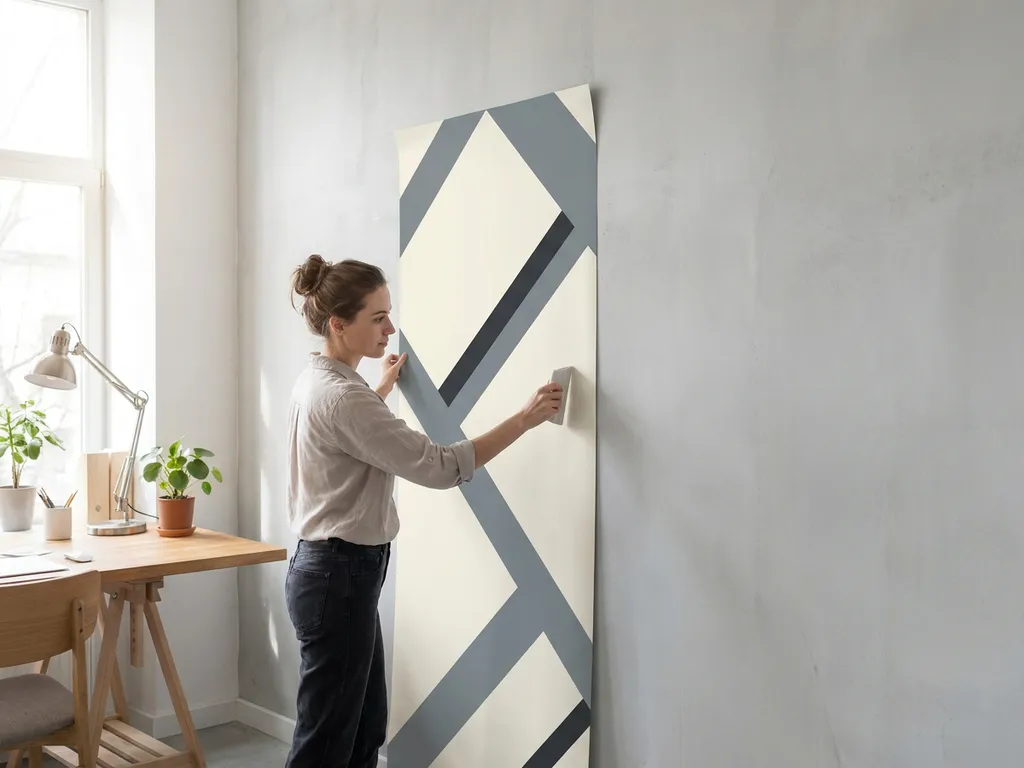
Self-adhesive wallpapers adhere reliably to smooth, clean, and dry surfaces such as painted walls, drywall, wood, glass, and tiles. Adhesion depends primarily on the surface texture and preparation. This article answers the most important questions regarding suitable surfaces, preparation, and durability.
On which surfaces do self-adhesive wallpapers adhere reliably?
Self-adhesive wallpapers adhere best to smooth, non-porous, and clean surfaces. These include painted walls with emulsion paint, drywall, painted wooden surfaces, glass, tiles, as well as metal and plastic surfaces. It is crucial that the surface is free of grease, dust, and completely dry.
Self-adhesive wallpapers work particularly well on walls with a smooth coat of paint in good condition. The paint should adhere firmly and not peel off, otherwise the wallpaper will detach along with the paint layer. Silk-matte or glossy wall paints generally provide a better base for adhesion than heavily matte or chalky surfaces.
Even freshly plastered or spackled walls are suitable, provided they are completely cured and sealed. Raw, untreated plaster absorbs the adhesive layer too much and prevents even adhesion. A quick primer remedy this.
Which surfaces are unsuitable for peel-and-stick wallpaper?
Self-adhesive wallpapers do not adhere reliably to rough, porous, damp, or textured surfaces. Woodchip wallpaper, coarsely textured plaster, untreated masonry, damp walls, and surfaces with loose or peeling paint layers are unsuitable. A permanently stable bond is not possible on these substrates.
Textured wallpapers and woodchip wallpaper present a special problem: the adhesive surface only contacts the raised parts of the texture, rather than forming a flat, continuous bond. This causes the wallpaper to peel off quickly at the edges and across the surface. The same applies to highly absorbent substrates such as untreated concrete or raw plaster.
Silicone paints and highly water-repellent coatings are also problematic because the adhesive cannot form a sufficient bond. Walls with persistent moisture or mold should generally not be covered with self-adhesive wallpaper. This does not solve the underlying problem and can permanently impair adhesion.
How do you prepare a wall for peel-and-stick wallpaper?
The wall must be before the Applying self-adhesive wallpaper be clean, dry, and smooth. Remove dust, grease, and dirt with a mild detergent and allow the surface to dry completely. You should repair or remove loose layers of paint, cracks, or unevenness prior to bonding.
Proceed step by step during the preparation:
- Clean surface: Wipe the wall with a slightly damp cloth and remove any grease or residue. Allow the surface to dry completely.
- Check substrate: Test whether the existing paint adheres firmly. Briefly press on adhesive tape and peel it off. If paint comes off with it, the surface must be repainted or primed.
- Smoothing out unevenness: Fill smaller cracks and holes with filler and sand them down. The smoother the surface, the better the adhesion.
- Note the temperature: Processing should take place at room temperature between 15 and 25 degrees Celsius. Cold significantly reduces the adhesive strength.
- Wait for drying: Freshly painted or filled walls need sufficient time to cure, usually at least 24 to 48 hours.
A cleanly prepared substrate is the most important factor for a long-lasting bond. Anyone who skips this step risks premature detachment, especially at the edges and corners.
Do peel-and-stick wallpapers also work on tiles or glass?
Yes, self-adhesive wallpaper works very well on tiles and glass, provided the surfaces are smooth, clean, and grease-free. Both substrates offer a uniform, non-porous surface to which the adhesive adheres well. Grout lines between tiles can affect the visual appearance, but the adhesion itself remains stable.
When working with tiles, you should ensure that the grout lines are not too deep or too wide. Deep grout lines create visible impressions on the wallpaper and can cause the material to bulge slightly over the lines. On large-format tiles with narrow grout lines, the visual result is significantly better than on small-format mosaic tiles.
Glass is an ideal surface for self-adhesive wallpaper. The smooth, non-porous surface allows for uniform adhesion across the entire area. It is important to thoroughly clean the glass beforehand with a degreasing agent and let it dry completely. Fingerprints or residues from glass cleaners containing silicone can impair adhesion.
How long does peel-and-stick wallpaper last on different surfaces?
On well-prepared, smooth surfaces such as painted walls, glass, or tiles, self-adhesive wallpaper generally holds reliably for several years. The actual durability depends on the quality of the material, the surface preparation, and the environmental conditions. In damp rooms or with strong sunlight exposure, the adhesion may decrease sooner.
On optimal surfaces—meaning smooth, dry walls with a solid coat of paint—durability of three to five years and more is realistic. On less suitable surfaces, such as slightly textured paint or surfaces with temperature fluctuations, you should expect a shorter lifespan.
The following factors significantly influence the shelf life:
- Substrate quality: The smoother and more stable the surface, the longer the wallpaper will last.
- Humidity: In bathrooms or kitchens with high humidity, edges loosen more quickly. Materials with specially suited adhesive are recommended here.
- UV exposure: Direct sunlight can prematurely age both the adhesive and the backing material.
- Material quality: High-quality print media with a durable adhesive layer last significantly longer than cheaper alternatives.
- Processing: Careful bonding without air bubbles and with sufficient pressure noticeably extends the durability.
If you are using self-adhesive wallpaper in commercial settings or for long-term installations, it is worth opting for professional print media with certified adhesive performance.
Self-adhesive wallpapers by com2C: PVC-free, print-ready, field-tested
We develop and produce self-adhesive printing media for professional large-format printing applications. We place particular emphasis on materials that perform reliably in practice – many of which are PVC-free.
Our peel-and-stick wallpaper is PVC-free, optimized for all common large-format printers, and specifically developed for use on the typical surfaces described in this article. What is important to us in this regard:
- PVC-free materials: Our GoGreener line offers a PVC-free alternative to conventional films, without compromising on adhesion or print quality.
- Compatibility: The media work reliably with solvent, latex, UV, and water-based ink systems from HP, Epson, Roland, Mimaki, Durst, and other manufacturers.
- Technical consulting: We support you in material selection for specific substrates and application conditions, even for unusual projects.
- In-house production: Thanks to our in-house chemical laboratory for inkjet coatings, we can specifically tailor adhesive properties and printing behavior.
If you have any specific questions about materials, substrates, or print parameters, please feel free to contact us. Just take Contact, and we will find the right solution for your project together.