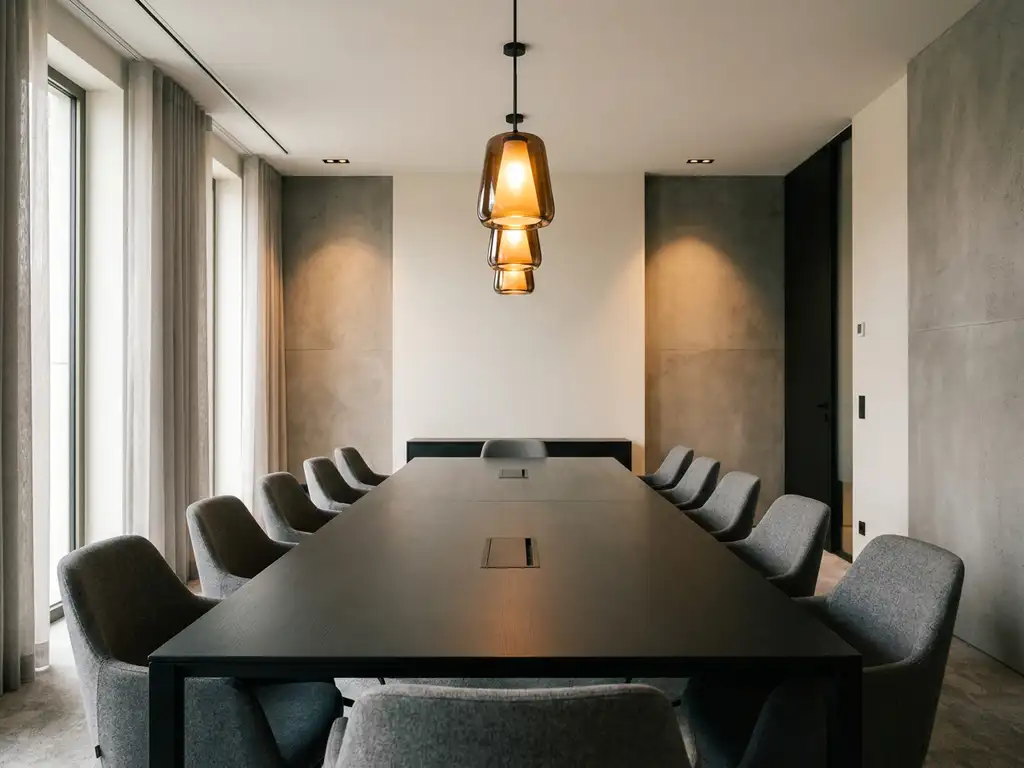
A good conference room combines functional features with thoughtful room design that promotes concentration and enables professional meetings. It must function technically reliably, be acoustically pleasant, and at the same time reflect the company’s identity. The following sections answer the most important questions about conference room design, equipment, and corporate design.
What equipment does a professional conference room need?
A professional conference room requires reliable presentation technology, sufficient seating, good lighting, a stable internet connection, and appropriate acoustics. These basic elements determine whether meetings run productively or fail due to technical and spatial issues.
The equipment can be divided into three categories:
Technology and communication
- Large screen or projector with clear image even in daylight
- Video conferencing system with a good camera and microphone for hybrid meetings
- Stable WLAN or LAN connection with sufficient bandwidth
- Adequate power outlets and USB ports at the table
Furnishing and room comfort
- Ergonomic chairs that are also suitable for longer meetings
- Conference table in a size that fits the space
- Adjustable lighting, ideally with daylight option
- Acoustic measures such as wall panels or ceiling panels to reduce reverberation
The acoustics are often underestimated. A hallouged room makes presentations tiring and videoconferencing difficult to understand. Even simple measures such as textile wall coverings or curtains significantly improve speech intelligibility.
How does the room design influence the atmosphere in the meeting room?
The room design directly influences how participants feel in a meeting room and how focused they can be. Colors, materials, light, and visual structures create an atmosphere that either supports focused work or distracts and tires people out.
Light, neutral colors on walls have a calming effect and make a room appear larger. However, too sterile white surfaces can appear cold and uninspiring. A thoughtful combination of accent colors and calm base tones creates a pleasant balance.
Natural light is always preferable when available. Where this is not possible, lighting with adjustable color temperature is recommended. Cool light promotes concentration, while warmer light is suitable for creative discussions or more informal conversation formats.
The overall design of the office also sends a message to visitors and employees. A well-maintained, visually appealing meeting room signals professionalism and respect towards the people you are talking to.
How can corporate design be implemented in the conference room?
Corporate design can be implemented in the conference room through targeted wall design, color scheme, typography, and material selection that match the visual appearance of the company. The room thus becomes part of the brand communication without being intrusive.
Concrete ways to implement it:
- Branded colors as accents: A wall in the company's color or a colored frame around the presentation area sends a clear signal without overloading the space.
- Logo and Claim: Placed discreetly on a wall or glass surface, the logo reinforces the brand identity, especially when external guests use the space.
- Individual vinyl wallpaper or wall foils: These enable the precise implementation of brand motifs, patterns or visual worlds in high-quality print quality.
- Glass decorative films: Suitable for partitions or doors, they combine privacy with design elements such as logos, lines, or patterns.
Consistency is important here: the corporate design in the conference room should match the reception area, the hallways, and the rest of the office visually. A uniform image looks more professional than individual, unconnected design elements.
Which wall design is best suited for conference rooms?
Wall designs are particularly suitable for conference rooms, as they are durable, easy to maintain and visually appealing yet show character. Printed vinyl wallpaper, wall foils and glass decorative foils have proven themselves in practice because they can be precisely tailored to the room.
The choice of the right wall design depends on several factors:
Permanent design
Vinyl wallpaper with individual motifs or corporate colors is suitable for walls that are intended to remain consistent over the long term. It can be printed in high resolution, is seamlessly applied, and looks more high-quality than simple wall paint. For conference rooms that are regularly used by customers and partners, this is a compelling option.
Flexible and interchangeable solutions
Self-adhesive wall films offer more flexibility. They can be removed and replaced without leaving any residue, which is practical for rebranding or seasonal adjustments. For glass surfaces, decorative films are ideal, combining privacy and brand visibility.
As a general rule, conference room wall design should not compete with the presentation. A quiet, well-designed main wall behind the presentation area looks more professional than a completely printed area that distracts from the content.
When should a conference room be redesigned?
A conference room should be redesigned if it no longer reflects the current corporate design, is technically outdated, or no longer meets the standard the company wants to convey externally. A redesign is also advisable after a move or rebranding.
Specific occasions where redesign becomes relevant:
- Rebranding or new corporate design: If the logo, colors, or visual language change, the conference room should be adapted in a timely manner.
- Growth and new requirements: More employees, more frequent external meetings, or hybrid work formats often require a different layout of the space and technology.
- Used or outdated materials: Tarnished walls, damaged foils or outdated furniture look unprofessional and leave a bad impression on visitors.
- Change in corporate culture: If the company wants to be more open, modern, or sustainable, the space should make this attitude visible.
In practice, it pays to critically evaluate conference rooms every three to five years. Not every redesign requires a complete overhaul. Often, new wall designs, updated slides, or improved lighting are enough to make the room look contemporary again.
Design conference rooms with com2C
Anyone who wants to professionally design a conference room needs materials that are technically reliable and aesthetically appealing. At com2C, we help companies equip meeting rooms with high-quality print media that make corporate design visible and ensure long-term success.
Our com2C Interior Film Collection offers concrete solutions for conference room design:
- printable vinyl wallpaper for individual wall designs in high resolution
- Self-adhesive wall foils that can be removed without leaving any residue
- Glass decorative films for partitions, doors and visual protection applications
- Materials compatible with all common large-format printers
- Technical advice when standard materials are not the appropriate solution
We always think about the application in question: which material will last in the conference room in the long term, be easy to clean, and still look good after years? If you have specific requirements or are unsure which material is best suited for your project, please feel free to contact us. A brief Consultation It often helps to make the right decision quickly.