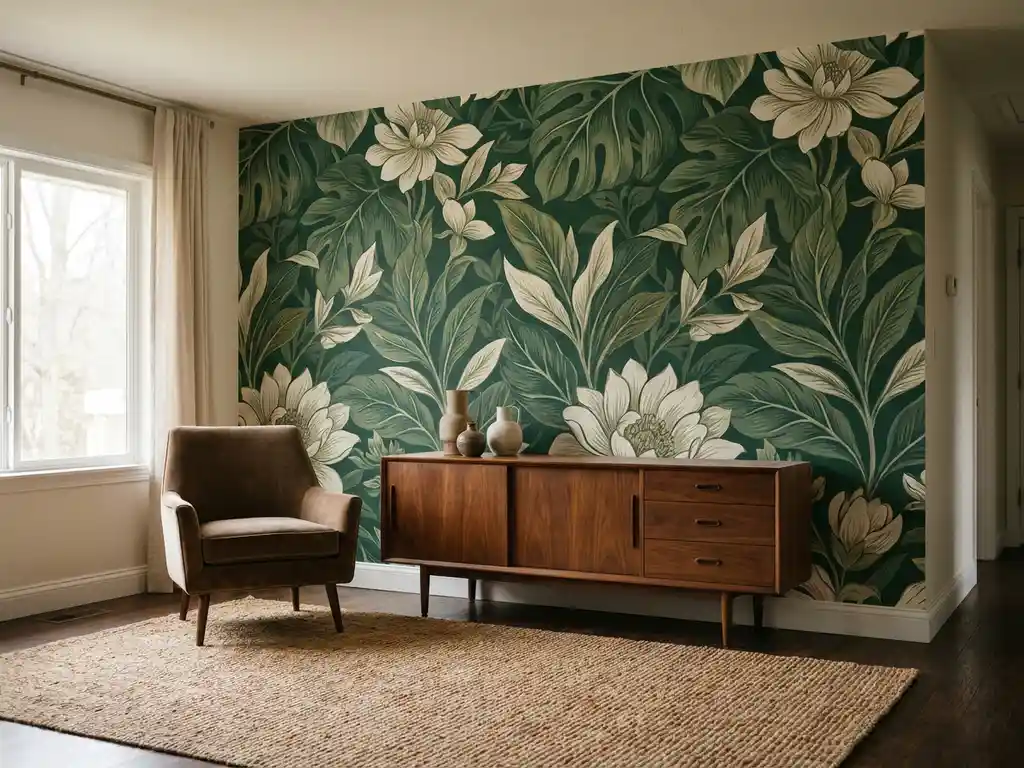
Making rooms appear of higher quality primarily relies on the targeted selection of high-quality surface materials, a well-thought-out wall design, and the use of professional print media. By consciously designing walls, floors, and glass surfaces, one can noticeably change the perception of space without having to undertake complex renovations. The following questions highlight which materials, techniques, and decision criteria are truly relevant in this context.
Which materials make rooms instantly more high-quality?
High-quality room design begins with the right choice of materials. Self-adhesive films, printable vinyl wallpaper, textile prints, and glass decorative foils immediately change the effect of a room. What matters here is not only the appearance but also the quality of workmanship: materials that can be processed cleanly and are durable appear more professional than cheap alternatives.
High-resolution printed vinyl wallpaper is particularly suitable for walls because it can be installed without gaps and creates a uniform, clean surface. Glass surfaces can be textured with matte or transparent foils, instantly adding more character to meeting rooms and reception areas. Floor panels with a non-slip surface complement the overall look without compromising on safety.
Textile prints on stretched frames or as hanging elements bring warmth and depth to a room that is difficult to achieve with hard materials alone. Backlit media, that is, printed works backlit, purposefully highlight elements and create an atmosphere that visitors immediately perceive.
How does wall design affect spatial perception?
Wall design influences how large, bright, quiet, or lively a room appears. Large-scale motifs optically stretch low spaces, horizontal patterns make narrow spaces appear wider, and smooth color or texture gradients create a calming atmosphere. The wall is the largest continuous surface in the room and therefore the strongest design element.
For hotels, this means: An individually designed lobby wall communicates brand identity before a guest has even spoken to the staff. For offices, well-thought-out wall design in the reception area or in meeting rooms signals professionalism and strengthens the trust of visitors and employees alike.
It is important that wall design is not viewed in isolation. It works best when it is coordinated with flooring, lighting, and furnishings. A printed wall panel in a color that is not used in the rest of the room can appear out of place, even if it is technically executed flawlessly.
What is the difference between film, wallpaper and textile printing for interiors?
Film, wallpaper and textile prints differ in their carrier material, processing and application area. Films are self-adhesive and suitable for smooth surfaces such as glass, walls or floors. Vinyl wallpaper is applied with adhesive and offers a seamless, matte surface for large-scale wall designs. Textile prints on stretch frames or roller blinds are flexible to use and easily replaceable.
Self-adhesive films
The films can be quickly applied and removed, making them attractive for temporary applications or frequently changing designs. They are suitable for shop windows, glass partitions, doors, and floors. High-quality films with air channels can be processed without bubbles and leave no residue when removed.
Vinyl wallpaper
Vinyl wallpaper is the preferred solution for permanently designed wall surfaces in hotels, offices and restaurants. It prints with high color depth and can be installed without seams. Compared to films, it is less flexible to replace and offers a higher-quality, longer-lasting appearance.
Textile prints
Printed textiles on stretch frames or as hanging elements are particularly popular in hotel lobbies, at trade shows, or in modern open-space offices. They feel softer and warmer than hard materials, absorb sound, and can be quickly replaced if needed. Specially developed textile media are available for backlit applications, which allow light to pass through evenly.
How often should room design elements be replaced?
How often room design elements should be replaced depends on the level of usage, the material, and the design concept. Window film in Concept Stores changes seasonally, i.e., approximately every three to six months. Wall designs in hotels or offices are designed to last for several years, provided the materials are suitable for the respective application.
A common mistake is using materials that were developed for outdoor use or short-term applications in places where they will be used continuously. Such materials fade, peel off, or become unsightly after a short time, which has the opposite effect.
For operators of hotels or offices, a maintenance plan is recommended: When are which areas to be inspected, when are refreshes necessary? Glass decorative films in highly frequented areas can show signs of wear after two to three years of use, while high-quality vinyl wallpaper remains remarkably pristine for much longer in a quietly used meeting room.
Which printing solutions are suitable for lobbies, meeting rooms and shop windows?
For lobbies, meeting rooms and shop windows, there are specific printing solutions that are technically and aesthetically optimal. Lounges benefit from large-area vinyl wallpaper or backlit displays, meeting rooms from glass decorative foils and wall decals, and shop windows from transparent or printed adhesive films with good outdoor visibility.
Lobbies and reception areas
In lobbies, the goal is to create a first impression that communicates the brand identity immediately. Large-format wall prints on felt or textile, combined with backlit elements, create an atmosphere that immediately appeals to guests and visitors. Quality color reproduction is crucial here: motifs with fine gradients or photographs require a medium with high print resolution and good color depth.
Meeting rooms
Meeting rooms have special requirements: glass partitions should provide privacy without darkening the space. Matted or textured glass decorative foils solve this problem and can be printed with corporate logos or design elements. Wall decals with calm patterns or brand messages complement the room concept without distracting from the main focus.
Showrooms and POS areas
Shop window film must have an outward effect while at the same time allowing the view inwards or selectively blocking it. Perforated film allows visibility from the inside out, while appearing as a full-surface print from the outside. For seasonal campaigns, films with bubble-free adhesion and residue-free removal are the most practical solution.
What should one consider when choosing a print media supplier?
When choosing a print media supplier, you should look for technical expertise, a wide range of materials, reliable delivery, and genuine consulting quality. A supplier that offers only standard assortments and cannot help with specific requirements will undoubtedly cost you more time and money than a specialized partner.
The following criteria are relevant when selecting a supplier:
- Material width: Does the supplier offer media for different printing technologies (solvent, latex, UV, water-based inks) and application areas?
- Technical consulting: Can the supplier explain which material is suitable for which application, also taking into account printing technology and processing?
- Delivery reliability: Are delivery times predictable? Are there any bottlenecks with certain products?
- Reaction speed: How quickly does the supplier respond to requests, even for complex or unusual projects?
- Sustainability: Are there PVC-free or environmentally friendly alternatives for projects with corresponding requirements?
- After-Sales Support: Does the supplier also provide support after the purchase if there are any processing issues or complaints?
Standard suppliers can meet standard requirements. However, if your project requires specific materials, tight deadlines, or unusual application conditions, you need a partner with real expertise and the willingness to develop customized solutions.
High-quality space design with com2C: materials that really work
We support hotels, concept stores and offices in designing spaces with print media that are technically reliable and visually appealing. Our range covers the entire spectrum, from self-adhesive films to vinyl wallpaper to backlit textiles, and is compatible with all common large-format printers.
- We offer materials for solvent-, latex-, UV- and water-based printing systems from a single source.
- Our own chemical laboratory develops inkjet coatings that are tailored to specific printing requirements.
- We offer PVC-free alternatives to the GoGreener line for projects with sustainability requirements.
- For complex requirements, we quickly develop individual solutions, even if standard materials do not fit.
- Our advice is technically sound: we explain which material works for which application and why.
Our com2C Interior Film Collection offers a direct entry into our product range for interior applications. If you are planning a specific project or have questions about materials, we look forward to hearing from you. Consultation.