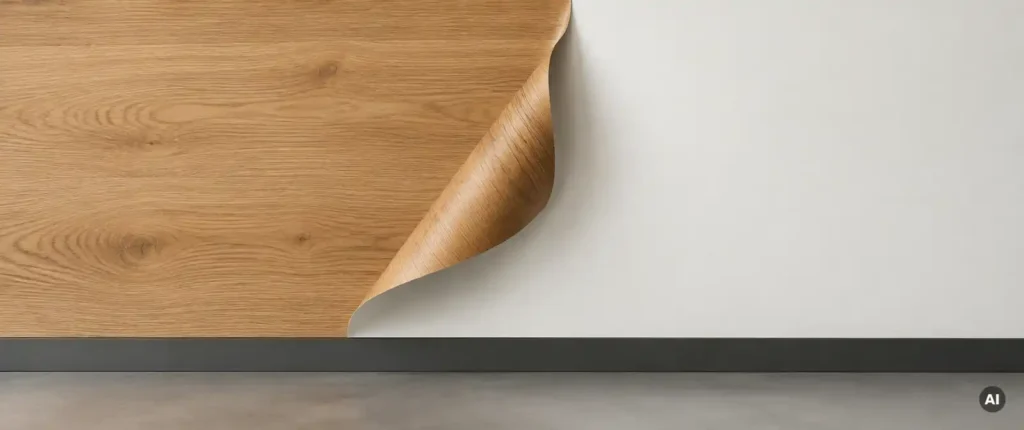
A convincing wood look can now be achieved without using real wood through high-quality printing media, especially through self-adhesive foils, printable vinyl wallpaper, and UV-printed panels. Modern digital printing technologies reproduce the grain patterns, textures, and color depth of wood with such precision that the difference is barely noticeable in everyday life. The following sections answer the most important questions about material selection, printing methods, areas of application, and quality characteristics.
Which materials produce a convincing wood look in digital printing?
Especially suitable for a realistic wood look without wood are the following products: self-adhesive decorative films, printable vinyl wallpaper and rigid carrier materials such as Forex or aluminum dibond. These materials capture wood decor motifs with high color accuracy and detail sharpness and can be applied flexibly to almost any surface.
Self-adhesive films are the most versatile format. They adhere to walls, furniture surfaces, doors, glass and floors. Depending on the application, you can choose between glossy, matte or textured surfaces, with matte and slightly textured variants particularly well supporting the natural appearance of wood. For large-scale wall designs, vinyl wallpaper is ideal, which can be installed seamlessly and create a room-high wood look without visible transitions.
For three-dimensional or tactile effects, there are also foils with a relief structure that not only reproduce wood grain visually but also haptically. These materials are often used in furniture finishing and interior design, where the touch on the surface is just as important as the visual impression.
How realistic does a printed wood look compared to real wood?
A professionally printed wood look is deceptively similar to real wood in direct comparison, provided the print resolution, color profile, and surface finish are matched accordingly. When viewed from a normal distance, the difference is usually not noticeable to the observer.
Quality depends on three factors: the resolution of the print motif, the quality of the inkjet coating of the carrier material, and the choice of surface. A high-resolution wood decor motif on a matte, slightly textured film achieves an effect that is convincing even when viewed closely. Glossy surfaces, on the other hand, can diminish the natural character of wood, as real wood rarely reflects strongly.
Where printed wood effects reach their limits is in direct tactile comparison with smooth sheets without relief texture. When someone touches the surface, they can feel the difference. However, for purely visual applications such as wall designs, shop windows, or room dividers, this aspect is irrelevant.
Where can a wood look be effectively achieved using film or wallpaper?
Wood-effect films and vinyl wallpaper are suitable wherever real wood is not practical for technical, economic or weight-related reasons. Typical applications include walls in hotels and offices, furniture surfaces, shop fixtures, exhibition stands and reception areas.
Wood-effect wall design in hotels and the hospitality industry
Hotels use wood-effect wall designs to create atmosphere and brand identity in lobbies, rooms, and restaurant areas. The advantage over real wood lies in its easy renewal: if the design needs to be updated, the film or wallpaper can be replaced without much effort, without damaging the walls or requiring renovation work.
Wood effect in Concept Stores and Retail
Concept stores use wood decor films for themed walls, shelving systems, floor coverings, and seasonal decorations. The quick interchangeability is particularly relevant here, as collections and campaigns change regularly. A wood-effect floor film can make a space feel warm and inviting without the need to install parquet flooring.
Which printing methods are best suited for wood decor motifs?
UV printing, latex printing, and solvent printing are particularly suitable for large-format wood decor motifs. Each method has specific strengths that are different depending on the substrate and the application site.
- UV printing: Allows direct printing on rigid materials such as panels and composite materials. The colors dry instantly through UV light, which produces high detail sharpness and color brilliance in wood motifs. Particularly suitable for furniture surfaces and interior design.
- Latex printing: Water-based ink on flexible foils and vinyl wallpaper. Latex prints are odorless, safe for indoor use, and deliver natural-looking colors with good long-term stability. Ideal for wall designs in the hospitality industry and offices.
- Solvent pressure: Solvent-based ink for particularly weather-resistant applications. The most robust choice for wood aesthetics in outdoor environments or in heavily-trafficked areas.
The decisive factor for the result is not only the printing process, but the combination of printing methods and the substrate material. A latex printer achieves significantly better results on a high-quality, specially coated vinyl wallpaper than on an incompatible material.
How durable is a wood look from printed media in practice?
High-quality wood-effect films and vinyl wallpaper for indoor use have a lifespan of five to ten years if they are properly applied and not subjected to excessive mechanical stress. In outdoor use, durability depends heavily on the chosen material and the lamination used.
For interior walls without direct sunlight and without frequent mechanical contact, laminated films are particularly durable. An UV protection coating prevents the fading of the wood colors and significantly extends the lifespan. Floor films require special non-slip and wear-resistant materials designed for pedestrian traffic.
Compared to real wood, printed media offer a practical advantage: they are easy to renew. If a film shows visible signs of wear after years of use, it can be removed without leaving any residue and replaced with a new design. This makes the wood-effect interior decoration with film economically attractive, especially in rooms that are regularly redesigned.
What should one consider when selecting a supplier for wood-optic printing media?
When selecting suppliers for wood-effect printing media, technical expertise, a wide range of materials, and quality advice are more important than price alone. A good supplier knows the requirements of different printing methods and recommends the appropriate material for your specific application.
- Material compatibility: The printing media must be compatible with your printing system, whether HP, Epson, Roland, Mimaki, or another device. Ask explicitly for proof of compatibility.
- Coating quality: The inkjet coating of the carrier material determines how precisely the wood motif is reproduced. Suppliers with their own laboratories can provide specific information in this regard.
- Sample delivery: Serious suppliers provide samples before ordering larger quantities. Test the material with your own printer and your own designs.
- Technical support: When problems arise with printing, you need a contact person who knows the material and can respond quickly, not just a hotline.
- Sustainability: For projects with environmental requirements, PVC-free alternatives should be available. Ask specifically about environmentally friendly options.
Avoid suppliers that only have standard ranges and do not offer individual advice. Especially in wood optic projects with specific requirements regarding surface finish, format or printing methods, expert support is essential to avoid costly misprints.
Wood effect printing media from com2C: advice, material and solution all in one place
We support digital printers, signage specialists and interior designers in implementing wood effect projects in a technically clean way. Based on more than 20 years of experience in the development and production of print media, we know what matters when a wood decor motif is to truly stand out.
- We offer printing media for all common printing methods, compatible with HP, Epson, Roland, Mimaki, Durst and other systems.
- Our materials for wood-look applications include self-adhesive films, vinyl wallpaper and textured surfaces, all with precise inkjet coatings from our own laboratory.
- We provide samples before you place an order and assist you in selecting the materials for your specific application.
- For projects with environmental requirements, PVC-free alternatives from our GoGreener line are available.
- If standard materials do not fit, we develop an individual solution together with you.
Our Interior Film Collection gives you a concrete overview of our materials for interior applications, including wood decor films for walls, furniture, and floors. If you have an ongoing project or have questions about material selection, please feel free to Contact. We respond quickly and concretely.