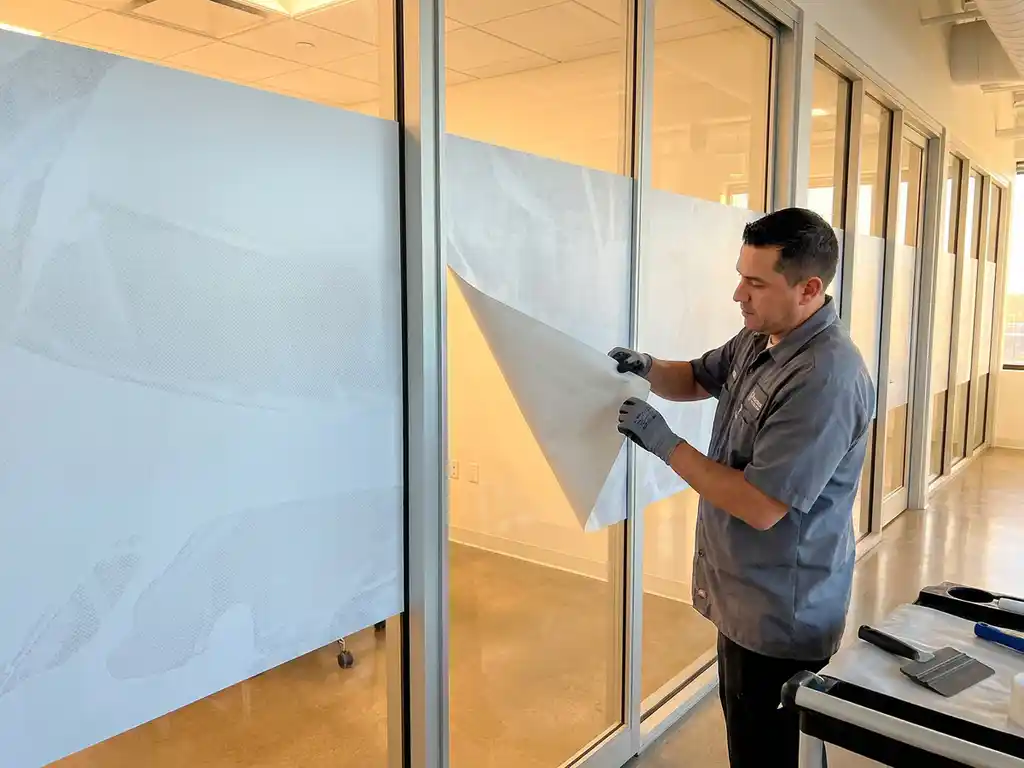
Yes, self-adhesive films can in most cases be removed without leaving any residue. Whether this is successful depends primarily on the quality of the adhesive used, the condition of the surface, and how long the film has been applied. The following sections answer the most important questions regarding adhesive films, residues, and proper removal.
When does a self-adhesive film leave residue?
A self-adhesive film leaves residue when the adhesive has bonded too strongly to the surface or has chemically changed due to heat, UV light, or a long duration of application. The risk of adhesive residue remaining increases especially on porous, rough, or sensitive surfaces.
The most common causes of residues are:
- Substandard adhesive: Cheap films use adhesive that hardens with heat or moisture and cannot be peeled off cleanly.
- Adhesive duration too long: The longer a film remains stuck, the stronger the adhesive bonds with the surface.
- Direct sunlight: UV radiation accelerates the aging of the adhesive and can cause it to become brittle or penetrate into the substrate.
- Unsuitable substrate: On freshly painted walls, wallpaper, or unsealed wooden surfaces, the adhesive bonds more deeply and is harder to remove.
- Incorrect distance: Peeling off the film too quickly or at the wrong angle risks leaving behind adhesive residue or damaging the surface.
Which films can be removed without leaving any residue?
Films with a so-called air-release adhesive or a specially developed repositionable adhesive can generally be removed without leaving any residue. These adhesive systems are designed to bond reliably while allowing for clean and residue-free removal when needed.
The following film types are particularly suitable for residue-free removal:
- Films with repositionable adhesive: These films adhere firmly enough for everyday use, but can be removed again without any effort. They are ideally suited for rental apartments.
- Air duct foils: Due to the structured adhesive layer, there is no full-surface bond with the substrate, which makes removal significantly easier.
- High-quality vinyl films: High-quality materials with defined adhesive properties behave predictably and can be removed in a controlled manner.
The quality of the film itself is always important in this context. Cheap products from unknown sources do not provide reliable information regarding adhesive strength and removability. Anyone wanting to play it safe should choose films where the manufacturer provides specific information on repositionability.
How long can an adhesive film stick before it leaves residue?
Most high-quality self-adhesive films for indoor use are designed for an adhesive lifespan of two to five years without leaving permanent residue. After this time, the risk increases that the adhesive will change and no longer peel off cleanly.
The exact time span depends on several factors:
- Indoor climate High humidity, such as occurs in the kitchen or bathroom, can cause the adhesive to age faster.
- Temperature: Strong temperature fluctuations or continuous heat, for example behind a stove, affect the adhesive properties.
- UV exposure: Films exposed to direct sunlight should be removed earlier than those in shaded areas.
- Product quality: High-quality films with strong adhesive systems retain their properties significantly longer than standard products.
As a general rule, it is recommended to remove a foil after at least three to four years, while ensuring that the proper technique When used, it does not have any problems with residues in most cases.
How do you properly remove an adhesive film without leaving residue?
An adhesive film is best removed without leaving any residue if you pull it off slowly and at a shallow angle of about 30 to 45 degrees. Heat helps to loosen the adhesive without damaging it.
Proceed step by step:
- Heat the film: Use a heat gun or an iron at a distance to heat the film evenly. The adhesive will soften and release more easily.
- Lift corner: Carefully lift a corner of the film with a fingernail or a plastic spatula. Do not use metal to avoid damaging the surface.
- Peel off slowly and evenly: Peel off the film at a shallow angle. Angles that are too steep increase the risk of adhesive residue being left behind or the film tearing.
- Remove residue: If any adhesive residue remains, isopropyl alcohol, cooking oil, or special adhesive removers will help. Test the product beforehand on an inconspicuous area.
- Clean surface: Wipe the surface with a damp cloth after removal and let it dry.
Especially with kitchen backsplashes, it is worth checking before installation whether the surface is smooth, clean, and free of grease. Good preparation not only makes installation much easier, but also makes it much easier to remove the film later.
Are self-adhesive films suitable for rental apartments?
Yes, self-adhesive films are generally suitable for Suitable for rental apartments, Provided that you choose a film with repositioning adhesive and pay attention to a suitable substrate, they will not cause any damage when removed properly and do not need to be reported to the landlord, as they do not constitute a structural change.
Especially in rented apartments, films are a practical solution for many typical problem areas:
- Kitchen backsplashes Outdated tiles can be quickly and affordably covered with printed adhesive films. After moving out, the film can be removed without leaving any residue, restoring the original condition.
- Bathroom: Special moisture-resistant films are also suitable for wet areas, as long as the joints and silicone surfaces are not permanently covered.
- Walls and floors: Decorative wall films or floor films can be installed and removed without tools.
An important note: Before installation, check whether the surface is suitable for adhesive films. Fresh wall paint, woodchip wallpaper, or highly absorbent surfaces can affect adhesion and make removal more difficult. Residue-free removal works most reliably on smooth, washable surfaces such as tiles or glass.
Self-adhesive films for your home: com2C supports you with this
If you want to use self-adhesive films for kitchen backsplashes, bathrooms, or other living areas, the right material is essential. We at com2C develop and produce print media specifically designed for these requirements: reliable adhesion, precise color reproduction, and an adhesive layer that can be cleanly removed after use.
What we offer you:
- High-quality self-adhesive films with defined adhesive properties for indoor use
- Materials that are compatible with all standard digital printers and allow for custom-made designs
- PVC-free alternatives from our GoGreener range
- Technical advice on substrate, adhesive system, and processing
- Quick availability and personal contact with real experts
You have a specific requirement or are unsure which material is suitable for your application? Feel free to contact us Contact, and we will be happy to help you.