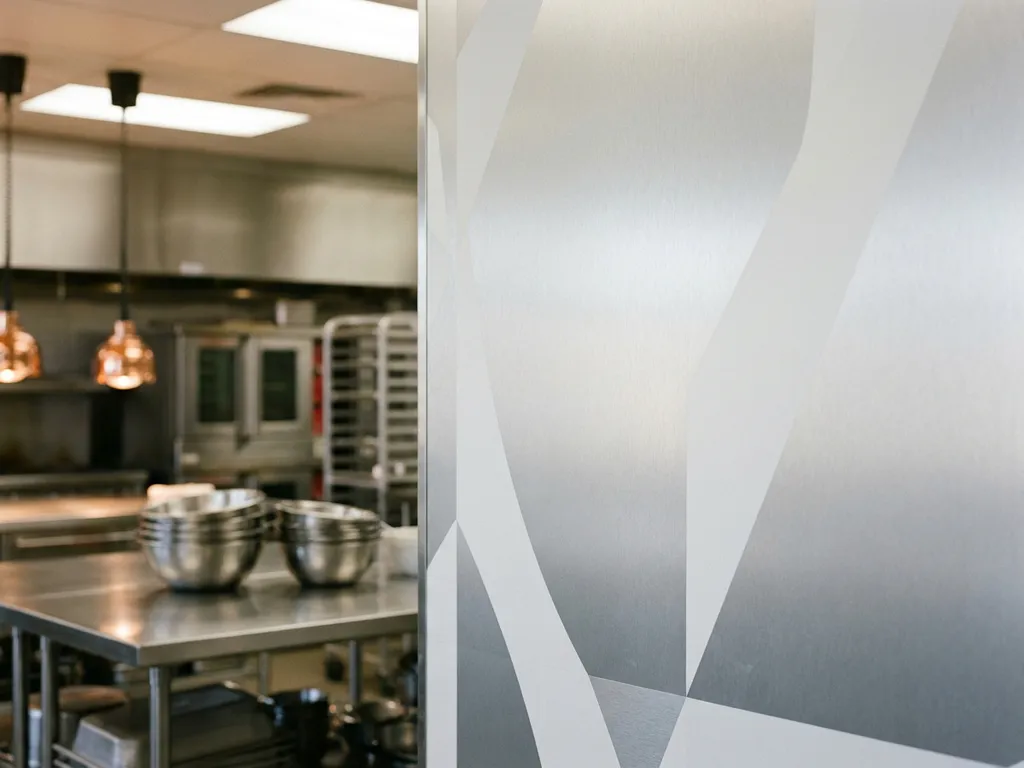
In commercial kitchens, wall surfaces must be smooth, low-moisture-absorbing, and easy to clean. These requirements are directly derived from the European food hygiene regulations, which apply to all food service establishments. This article answers the question of which materials are specifically permitted, how they perform in everyday use, and when an exchange makes sense.
Which materials are considered hygienic in commercial kitchens?
In commercial kitchens, wall surfaces are considered hygienic when they are smooth, non-absorbent, resistant to abrasion, and easy to clean and disinfect. Approved materials include stainless steel, glazed ceramic tiles, composite panels made of plastic or aluminum, and certain coated wall panels. What matters is not the material itself but its surface and workmanship.
The Food hygiene wall materials must be manufactured in accordance with EU regulation 852/2004 so that they do not release pollutants into food or form a breeding ground for germs. In practice this means: no open-pore surfaces, no cracks, no gaps where grease and dirt can accumulate.
The following materials are widely used in practice and are considered to be hygienic:
- Stainless steel: Not absorbent, corrosion resistant, easy to disinfect
- Glazed ceramic tiles: Smooth surface, heat-resistant, but with joint problems
- Plastic wall panels (e.g. PVC, HPL): Flexible joint arm, cost-effective
- Aluminium composite panels: Lightweight, stable, hygienically processed
- Coated glass panels: Seamless, very smooth, visually high-quality
What do the hygiene regulations say about work surfaces in restaurants?
The hygiene regulations for food surfaces in the hospitality industry are regulated in EU Regulation 852/2004 on food hygiene. Annex II stipulates that walls in areas where food is handled must be made of smooth, non-abrasive, non-absorbent and easy to clean materials. National authorities and veterinary authorities inspect compliance with these requirements.
Specifically, this means for the hygienic wall design in the kitchen:
- Surfaces must meet hygiene requirements up to a height of at least 2 meters.
- Seams must be sealed or reduced to a minimum
- Materials must not release toxic substances into food
- Surfaces must withstand cleaning agents and disinfectants
In Germany, the guidelines of the German Society for Nutrition and the requirements of the competent food control authorities concretize these requirements. When building new or renovating existing buildings, it is advisable to coordinate the planned materials in advance with the competent veterinary authority.
How does stainless steel compare to tiles and wall panels?
Stainless steel is the most hygienic surface for kitchen worktops because it can be processed without seams, has no pores, and withstands all common cleaning and disinfection agents. Tiles are acceptable from a hygienic point of view, but the joints are a weak point. Modern HPL or aluminum composite wall panels offer a good compromise between hygiene, usability, and cost.
Stainless steel: Strengths and limitations
Stainless steel is the classic choice for professional kitchens with high hygiene requirements. The surface is non-absorbent, corrosion-resistant, and easy to disinfect. The disadvantage: Stainless steel shows fingerprints and scratches, and the purchase price is higher than for other materials. Improper handling can lead to gaps in the seams or attachment points, which can form breeding grounds for germs.
Tiles: Proven, but with grout problems
Glazed ceramic tiles have been standard in commercial kitchens for decades. The tile surface itself is perfectly hygienic. The problem lies in the joints: cement joints are porous and absorb grease, dirt, and germs. Epoxy joints are significantly better in terms of hygiene but more expensive and more complex to process. Damaged tiles with cracks or chipped edges must be replaced immediately.
Wall panels: a practical alternative
HPL (High Pressure Laminate) panels and aluminum composite panels are installed with minimal or no seams and offer a smooth, easy-to-clean surface. They are easier to install than tiles and can be easily replaced in the event of damage. For many commercial kitchens, they are today the most cost-effective solution.
Are self-adhesive films suitable for hygienic use in professional kitchens?
Self-adhesive films are only suitable for hygienic use in professional kitchens if they are specifically approved for the food industry, have a smooth and sealed surface, and permanently adhere to the substrate. Self-adhesive wallpaper without PVC components These devices generally do not meet these requirements and are not suitable for commercial use.
For the Wall cladding in commercial kitchens The following requirements apply to films:
- Food law compliance of the materials (no release of pollutants)
- Permanent adhesion even in the presence of moisture, steam and temperature fluctuations
- Smooth, closed surface without bubbles or detachments
- Resistance to cleaning agents and disinfectants
In practice, self-adhesive films in commercial kitchens are more often used for temporary applications or areas with low food contact, for example for refrigerator cladding, cabinet doors, or decorative back panels outside the direct cooking area. For the actual kitchen backsplash behind the stove and sink, more durable solutions such as stainless steel or wall panels are the better choice.
How are worktop surfaces properly cleaned in the professional kitchen?
Professional kitchen surfaces are properly cleaned by removing daily oil splashes and dirt with a suitable cleaning agent and performing a regular disinfection. The cleaning intensity and the choice of cleaning agents depend on the material of the kitchen surface.
A practical cleaning plan for Countertops in the professional kitchen typically looks like this:
- Daily cleaning: Remove rough dirt with warm water and a degreasing cleaner, wipe the surface dry
- Weekly intensive cleaning: Treat all wall surfaces with an alkaline cleaner, paying particular attention to the joints and transitions.
- Disinfection: After cleaning, apply an approved disinfectant and follow the recommended application time.
- Documentation: Cleaning measures are documented in the HACCP plan
With stainless steel, you should not use abrasive products as they scratch the surface and deteriorate the hygiene properties. For tiles, grout care is particularly important: stained or damaged grout must be replaced before it becomes a hygiene problem.
When should a wall surface in the professional kitchen be replaced?
A wall surface in a professional kitchen should be replaced if it has cracks, peeling, permanent discoloration, or joint defects that cannot be removed by cleaning. Damaged surfaces are no longer hygienic and can be subject to inspection during a food safety inspection.
Concrete signs that a renewal is necessary:
- Cracks or peeling in tiles or coatings
- Mildew infestation in joints that cannot be removed
- Permanent discoloration caused by grease or food residues
- Disassembly of wall panels or foils
- Corrosion sites on stainless steel surfaces
- Complaints by the veterinary authority or the food control authority
As a general rule, if a surface no longer meets hygiene requirements after thorough cleaning, repair or replacement is not an option but a must. Regular visual inspections as part of the HACCP concept help you identify damage early on and avoid costly complaints.
Customize kitchen backsplashes with com2C
Clean wall surfaces don’t have to be boring. For those who want to customize their kitchen back walls not only functionally but also individually, we offer a practical solution. We develop and deliver high-quality print media, on the basis of which print service providers and advertising technicians can create custom-made, printed Kitchen backsplashes They are easy to manufacture, visually appealing, and easy to install.
What we specifically offer:
- Printed media with a smooth, closed surface that is easy to clean
- Materials with precise color reproduction for individual designs and motifs
- Removable options that are particularly suitable for rental properties
- Compatibility with all common large-format printers for reliable printing results
- Technical advice if you are unsure which material is suitable for your requirements
If you would like to know which printing medium is suitable for your specific application, we are happy to assist you. contact us and we will help you further.