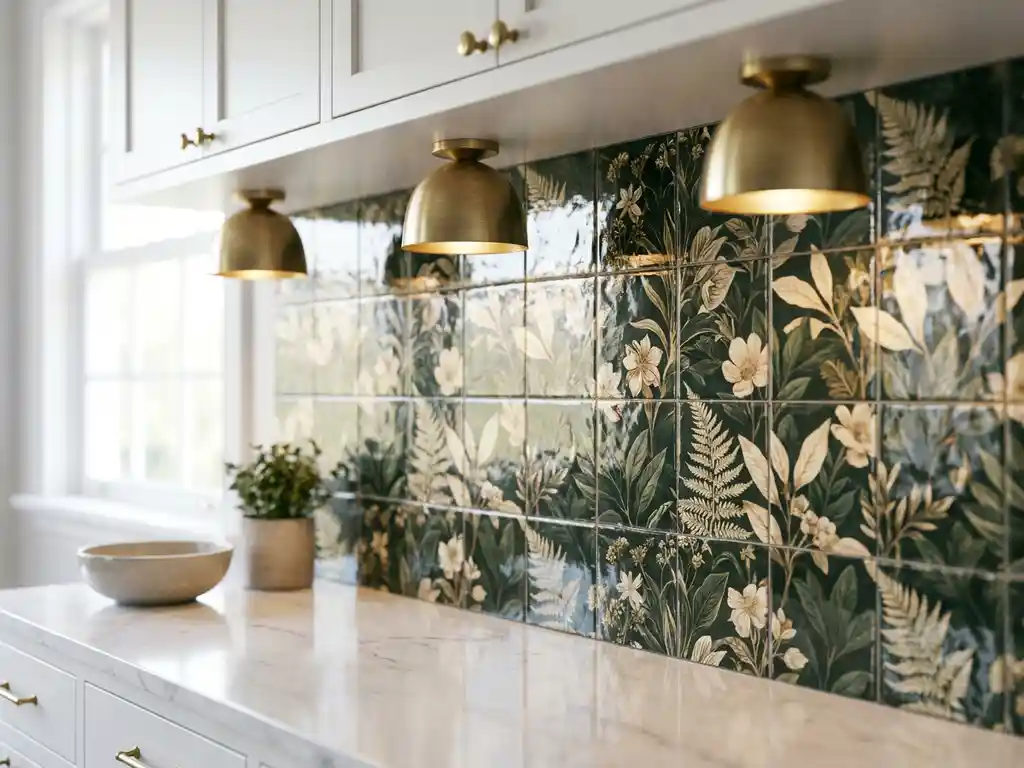
For printed kitchen backsplashes, self-adhesive films made of PVC or PVC-free materials are particularly suitable, which have been specifically developed for environments that are subject to moisture and heat. It is crucial that the material is heat-resistant, washable, and can be removed without leaving residue. The following sections answer the most important questions regarding material selection, installation, and suitability for rental apartments.
Which material properties are particularly important in the kitchen?
In the kitchen, the film material must be especially heat-resistant, moisture-resistant, and easy to clean. Splash water, steam, grease particles, and occasional temperature fluctuations place high demands on any surface. A material that does not withstand these conditions will peel off, discolor, or lose its adhesion.
Specifically, you should pay attention to the following properties:
- Heat resistance: Especially in the area behind the stove, high temperatures can develop temporarily. The film material should remain form-stable at least up to 80 °C.
- Moisture resistance: The surface must permanently repel steam and splashes of water without swelling or losing its adhesion.
- Washability: Grease and cooking spatter can be easily wiped off smooth, closed surfaces. Matt or textured surfaces are more challenging here.
- Print quality: The material must retain ink absorption and color brilliance even after cleaning procedures. A suitable inkjet coating is essential for this.
- Liability on the surface: The adhesive must reliably adhere to tiles, glass, laminate and painted surfaces without creating bubbles.
Which film types are best suited for kitchen walls?
Self-adhesive digital printing films with a smooth or slightly textured surface are best suited for kitchen backsplashes, designed for indoor applications with moisture and heat exposure. These include both classic PVC films and newer PVC-free alternatives based on polyolefin or polyester.
In practice, the following types of films have proven to be effective:
- Self-adhesive PVC film with air channels: The so-called Bubble-Free technology significantly facilitates bubble-free assembly. These films are robust, easy to clean, and well suited for kitchen environments.
- PVC-free polyolefin film: A PVC-free alternative that offers comparable technical properties and is also suitable for wet rooms.
- Glass decorative film: Specifically developed for glass surfaces or tile mirrors, with high transparency and resistance to cleaning agents.
Paper-based media or films without protective laminate are less suitable, as they absorb moisture and quickly become damaged. Also, very thin films without sufficient adhesive strength quickly lose their adhesion to the edges in the kitchen.
What is the difference between PVC film and PVC-free film?
PVC film (polyvinyl chloride) is the classic material for large-format printing: inexpensive, flexible, and well-tested from a technical perspective. PVC-free film replaces this plastic with alternatives like polyolefin or polyester, which release fewer pollutants during production and disposal. Technically speaking, both variants are suitable for kitchen backsplashes.
The main difference lies in the material: no PVC, no PVC-typical plasticizers. PVC contains chlorine and plasticizers that can produce problematic compounds during combustion. PVC-free materials are easier to recycle and are considered safer for indoor use, which is especially relevant in living areas.
From a user’s point of view, the differences in everyday use are minor. Both materials can be printed on, glued, and cleaned. PVC-free films are usually slightly stiffer, which can make processing large areas more difficult. Those who want to avoid PVC use the PVC-free variant.
Can printed kitchen backsplashes be used in rental apartments?
Yes, printed kitchen backsplashes made from self-adhesive film are well suited for rental properties because they can be removed without leaving any residue and do not permanently alter the building structure. Unlike tile paint, wall panels, or glass kitchen backsplashes, high-quality films leave no adhesive residue on the substrate when removed.
The quality of the adhesive is important here. Cheap films can leave behind residues when removed, or they can stain the color of the tiles. High-quality films with solvent-free adhesive and air channel technology can also be removed cleanly after several years, provided the substrate was clean, smooth, and free of grease.
Before installing a film in the rental apartment, you should check the substrate. Removing it from old, already damaged tiles or from surfaces with loose paint can cause damage that was not caused by the film. In case of doubt, it is worth conducting a quick test on an inconspicuous area.
How long does a printed kitchen backsplash made of foil last?
A high-quality printed kitchen backsplash made of film lasts for several years with proper installation and regular maintenance. The actual lifespan depends on the material quality, the exposure to heat and humidity, and the frequency of cleaning.
In practice, the following factors are relevant for durability:
- Substrate preparation: A clean, degreased, dry surface is the most important prerequisite for lasting adhesion.
- Material quality: Films with UV-resistant inks and a protective laminate keep colors and surfaces much more stable for longer.
- Heat load: Directly behind the stove, each foil ages faster. Here, a distance of at least 10 to 15 cm from open flames or heating coils is recommended.
- Cleaning: Aggressive cleaning agents or scouring pads damage the surface. Using a mild cleaner and a soft cloth will keep the film in good condition longer.
Under normal conditions, lifespans of three to five years are realistic. If you want to replace the foil with a new design after a few years, you have the option to simply redesign the kitchen without any complications.
How is a printed kitchen backsplash made from foil mounted?
The assembly of a printed kitchen backsplash made of film is done in a few steps: clean the surface, align the film, apply it gradually, and remove air bubbles. With the right preparation, the assembly is also possible without any special skills.
The steps in summary:
- Prepare the substrate: Thoroughly clean tiles, glass, or laminate with a grease-dissolving cleaner and let it dry completely. Remove any lime deposits and silicone residues.
- Cut the film: Cut the film to the desired size, leaving a small overhang of about one centimeter.
- Align the foil: Position the film without peeling off the backing film on the wall and fix it with masking tape to mark the exact position.
- Step-by-step application: Peel off the carrier film from one side and apply the film evenly with a hairdryer or credit card. Immediately remove any air bubbles.
- Edges pressing: Press firmly on any edges and corners. If necessary, use a low-power hairdryer to adjust the film in difficult places.
- Degree: Cut off the protruding edges cleanly with a sharp knife.
Films with air channel technology tolerate minor imperfections when applied, as trapped air can escape through the channels. For large areas, it is advisable to work in pairs.
Printed kitchen backsplashes from com2C: Materials that work in practice
At com2C, we supply printing media that have been developed specifically for demanding applications such as kitchen backsplashes. Our range includes self-adhesive films in PVC and PVC-free variants, which are designed for moisture and heat exposure and can be removed without leaving any residue.
- Self-adhesive films with air channel technology for bubble-free assembly
- PVC-free materials from our GoGreener line
- Inkjet coatings from our own chemical laboratory for precise color reproduction
- Compatibility with all common large-format printers and ink systems
- Technical advice by our expert team for specific requirements
Our Kitchen backsplashes They are suitable for print service providers and advertising technicians who want to offer their end customers customized, durable solutions. If you have questions about material selection or technical details, we are happy to help you with a Consultation available.