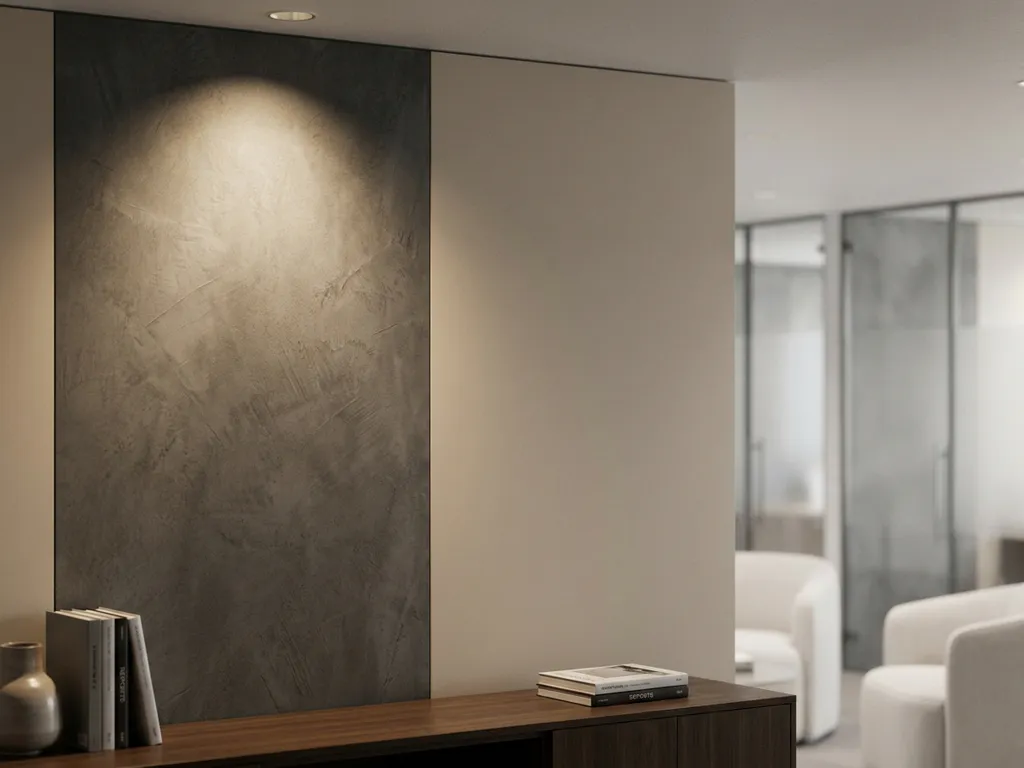
An office looks outdated when its design, structure, and brand identity no longer fit today’s working reality. This often shows up sooner than expected: faded walls, a lack of orientation, and no recognizable corporate design. The following questions and answers show which specific characteristics an outdated office reveals and how to counter them.
How do you recognize an outdated office at first glance?
An office appears unmodern when walls, furniture, and the spatial structure do not reveal a clear design line. Typical signs are neutral, uniform colors without brand association, worn or empty walls, outdated signage, and a layout that is designed exclusively for individual workstations. When someone enters the office, they immediately sense whether a space looks well-maintained and thought-out or not.
Specifically, the following characteristics are particularly common in outdated offices:
- Walls without a decorative function, often painted only white or beige
- Missing or faded signage and guidance
- No visible brand elements in the reception area or in meeting rooms
- Stuffy rows of desks without zones for collaboration or retreat
- Lighting and materials that no longer meet current standards
The problem is not solely of an aesthetic nature. Employees and visitors unconsciously draw conclusions about the corporate culture from the office design. A neglected space signals a lack of appreciation, even if that does not correspond to the company’s intentions.
What role does wall design play in creating a modern office image?
Office wall design is one of the most effective ways to make a space modern, inviting, and brand-compliant. Walls take up the largest visible area of a space and make a stronger first impression than furniture or lighting. Well-thought-out wall design communicates values, creates orientation, and improves the atmosphere for everyone who is in the office.
Modern offices actively use walls as a design surface. These include printed vinyl wallpaper with brand motifs, large-format glass decorative films for conference rooms, wall decals with guidance systems, and themed accent walls in reception areas. These solutions can be implemented without structural interventions and can also be removed or updated if necessary.
The wall design is particularly relevant in areas with high visibility: the entrance area, meeting rooms and open-space areas. Here, the design determines whether a room looks professional or casual. An empty wall behind the reception desk is a missed opportunity to make the company visible.
Why do offices without corporate design look unprofessional?
Offices without a corporate design look unprofessional because they lack a visual identity. Visitors and employees see a generic space that could just as easily belong to any other company. The absence of brand colors, logos, and design guidelines signals that the company places little importance on its own external appearance.
Corporate design in the office doesn’t mean painting every wall with the company logo. It’s about creating a consistent visual language that incorporates brand colors, typography, and visual worlds and translates them into the space. This can be done through signage, wall decals, labels, or printed textiles.
The effect on visitors is directly measurable: A reception area that clearly identifies the company creates trust. A neutral space without branding leaves no impression. For companies that receive customers or business partners, office design is part of the communication, whether intentionally designed or not.
How do modern work environments differ from traditional office layouts?
Modern work environments differ from traditional office layouts primarily through their flexibility and zoning. Instead of rigid individual workstations arranged in rows, they offer different areas for concentrated work, collaboration, informal exchange, and retreat. The design follows the question of how people actually work, not how offices were traditionally built.
Classic office layouts
Traditional offices are designed for individual work spaces. Each employee has a fixed desk; meeting rooms are separate and rarely usable flexibly. The design is functional but rarely inviting. Wall surfaces remain unused; orientation is achieved through signs on doors.
Modern work environments
Modern office concepts view space as a tool. There are zones for focused work, collaborative areas with moveable furniture, lounge corners for informal conversations, and clearly designed meeting rooms. Wall design serves multiple functions at the same time: it creates orientation, defines zones, conveys brand values, and improves acoustics. Glass decorative foils visually separate areas without closing the space.
The difference lies not only in the furnishings but in the overall design concept. Modern work environments are carefully thought out and not randomly assembled.
When should a company renew its office design?
A company should renew its office design when the design no longer fits the current brand identity, when employees or visitors perceive the space as outdated, or when structural changes such as growth, relocation, or a rebranding are underway. There is no fixed rhythm, but there are clear triggers.
Typical occasions for a design renewal are:
- Rebranding or updating the corporate design
- Moving to new premises
- Team growth and changing space requirements
- Returning to the office after hybrid work periods
- Preparation for important client appointments or corporate events
- Significant dissatisfaction among employees with the working environment
A complete renovation is rarely necessary. Often, targeted measures such as new wall design, updated signage, or the introduction of brand elements are enough to noticeably enhance a space. It is important that the measures follow a clear design concept and are not implemented arbitrarily.
Anyone who redesigns their office in 2026 will benefit from the fact that modern printing media for wall decorations are flexible, easily removed without leaving any residue, and can be implemented in a short time. This significantly reduces the effort required for a renovation.
How we specifically support com2C office design
Many offices do not appear outdated because they lack ideas, but because they lack the right materials and a reliable implementation. This is exactly where we come in. Our Interior Film Collection by com2C offers printing media specially developed for sophisticated interior design applications, ranging from glass decorative films to printable vinyl wallpaper and high-quality wall foils for reception areas and meeting rooms.
What we bring to the table for office projects:
- Printing media for glass surfaces, walls and floors that are easy to clean and remove without leaving residue
- Materials compatible with all common large-format printers, including latex, UV and solvent
- Consulting on material selection when technical or design requirements are complex
- Fast availability and short delivery times, so that projects do not fail due to material shortages
- PVC-free alternatives from our GoGreener line for companies with sustainability requirements
If you are planning an office project and are unsure which materials are suitable for your requirements, please feel free to contact us. A brief Consultation This is often enough to find the right solution.