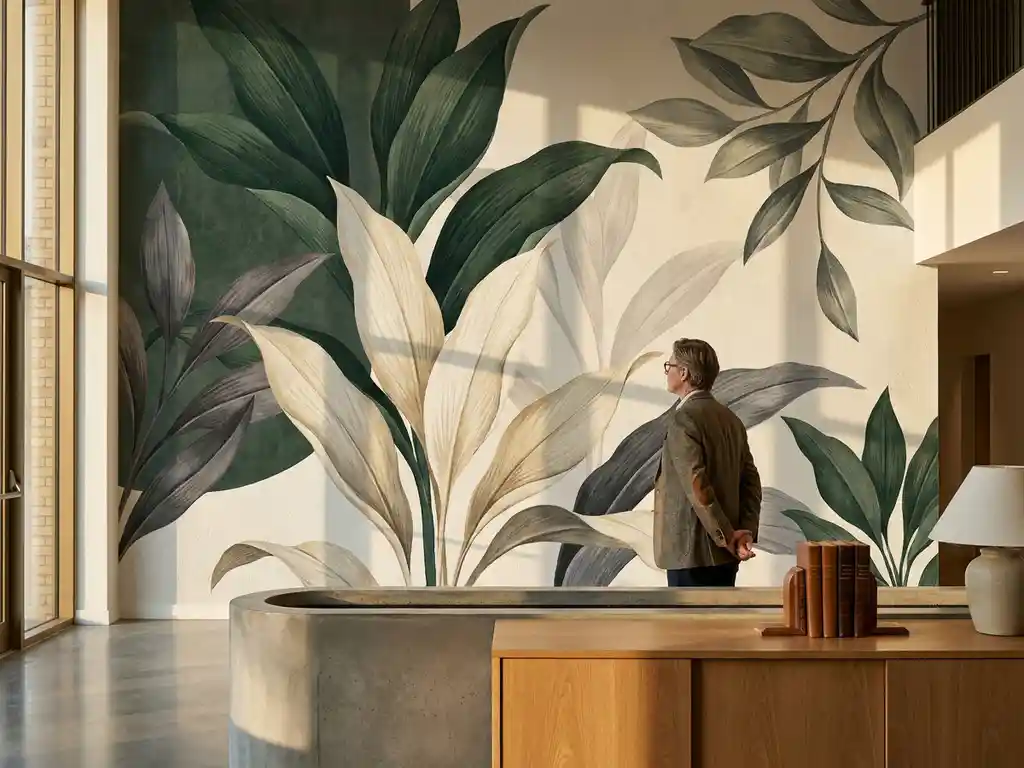
Whether wallpaper is more environmentally friendly than paint cannot be answered in a general way. It depends on the material, the manufacturing process, and the disposal of the product. PVC-free vinyl wallpaper often performs better in terms of overall environmental impact than solvent-based wall paints, while conventional vinyl wallpaper is ecologically problematic. This article answers the most important questions about sustainable wall decoration so that you can make an informed decision.
What pollutants are contained in conventional wallpaper and wall paints?
Conventional vinyl wallpaper contains PVC, which can release harmful chlorine compounds during production and disposal. Many solvent-based wall paints release volatile organic compounds (VOCs), which pollute the air and contribute to smog formation. Both product groups can therefore contain pollutants that harm humans and the environment.
When it comes to wallpaper, PVC is the biggest problem. It contains plasticizers such as phthalates, which are considered to be hormone-disrupting substances and can leach out of the material over time. Additionally, PVC wallpaper is made with chlorinated compounds, whose production and disposal significantly pollute the environment.
Wall paints vary greatly in their pollutant content. Solvent-based paints contain high concentrations of VOCs. These compounds evaporate into the air during application and for a long time afterwards. Water-based dispersion paints generally have lower VOC levels, but may contain biocides, preservatives, and synthetic binders that are also not harmless. The Blue Angel label identifies paints with particularly low pollutant levels and is a reliable guide when purchasing.
How does the production of wallpaper compare to paint?
The production of wallpaper is generally more resource-intensive than that of wall paint, as more layers of material, backing and coatings are processed. However, the actual environmental footprint depends heavily on the material used. PVC-free vinyl wallpaper made from recycled fibers can perform significantly better in production than many conventional paints.
Vinyl wallpaper consists of a mixture of polyester and cellulose fibers. High-quality products use recycled materials and avoid PVC and problematic plasticizers. The energy consumption during production is present, but can be increasingly optimized through modern manufacturing processes.
Wall paints require water, binders and pigments in the manufacturing process. The extraction of raw materials for synthetic binders is energy-intensive. In addition, paint usually has to be applied several times, which increases the overall consumption. A wallpaper, on the other hand, is applied once and lasts for many years with good quality, which reduces the resource consumption over the entire lifespan of the product.
What happens to wallpaper and paint at the end of their lifespan?
PVC wallpaper is not recyclable and ends up in the general waste stream or is burned, producing toxic dioxins. PVC-free vinyl wallpaper can in some cases be recycled or composted. Wall paint is difficult to dispose of because paint residues are considered special waste and do not belong in the household waste.
The disposal of wallpaper depends crucially on the material. PVC wallpaper is an ecological problem: they cannot be meaningfully recycled and release pollutants during thermal disposal. Vliestapeten without PVC, on the other hand, are significantly more easily disposed of. Some manufacturers offer take-back systems, and the material can at least be thermally recycled without releasing the same pollutants.
With wall paint, disposal is also not trivial. Dried paint residues can be disposed of in small quantities as household waste; however, liquid paint residues must be taken to the recycling center. Those who renovate regularly should carefully calculate the amounts of paint to minimize residues. Natural paints based on chalk, lime, or casein are biodegradable and therefore significantly less problematic at the end of their lifespan.
Which wallpaper and color types are truly sustainable?
Truly sustainable options for wallpaper are PVC-free vinyl wallpaper, paper wallpaper made from certified wood, and natural wallpaper made from grass, jute, or bamboo. In terms of colors, natural colors based on lime, chalk, or clay are considered ecologically acceptable, as are dispersion paints with the Blue Angel and low VOC levels.
Sustainable wallpaper at a glance
- PVC-free vinyl wallpaper: Free of chlorine compounds, durable and tear-resistant. Ideal for frequent renovations, as they can be removed dry.
- Paper wallpaper with FSC certification: They are made from sustainably managed wood, are biodegradable and low in pollutants.
- Natural wallpaper made of plant fibers: Grass, jute, sisal or bamboo are renewable raw materials with a good environmental footprint but limited moisture resistance.
Sustainable colors at a glance
- Lime and clay paints: Fully mineral-based, VOC-free, and biodegradable. Also regulates the room humidity.
- Pink color: Based on milk protein, low in harmful substances and well-tolerated.
- Disperse paints with the Blue Angel: Synthetic, but with proven minimum standards regarding pollutants and environmental compatibility.
When is wallpaper the more environmentally conscious choice over paint?
Wallpaper is the more environmentally conscious choice when you choose a PVC-free, long-lasting product that lasts for many years without replacement. Those who use a vinyl wallpaper made from recycled fibers benefit from a long lifespan and avoid the repeated consumption of materials that cause multiple coats of paint.
The lifespan plays a central role in the environmental balance. High-quality wallpaper lasts ten to fifteen years or longer. Wall paint must be replaced every five to eight years in many living areas. When you add up all the paint, primer, and work materials over that period, you’ll find that despite higher material usage per application, the wallpaper often performs better overall.
Wallpaper is also a better choice if you want to cover uneven or cracked walls without having to apply a thick coat of primer beforehand. This saves on materials and labor. For rooms with heavy use, such as hallways or offices, durable vinyl wallpaper offers a more durable solution than paint, which quickly shows signs of wear.
Color remains the better choice when using natural colors based on lime or clay and you only replace the walls rarely. In damp rooms, where wallpaper can develop mold more quickly, a suitable moisture-resistant paint is more ecologically sound than a paint that has to be replaced after a short time.
PVC-free vinyl wallpaper from com2C: PVC-free and proven in practice
We develop and produce printing media for digital large-format printing, including printable vinyl wallpaper that completely eliminate PVC. For printing service providers, advertising technicians, and room designers who want to offer PVC-free wall design to their customers, we offer technically reliable PVC-free materials.
Our PVC-free non-woven wallpaper from com2C are compatible with the popular large-format printers from HP, Epson, Roland, Mimaki and Durst and work reliably with latex, UV and water-based ink systems. What is important to us in this context:
- No PVC: Our vinyl wallpaper is free of chlorine compounds and plasticizers that harm the environment.
- Longevity: The material is tear-resistant, removable and designed for long-lasting use, which reduces resource consumption over the entire lifecycle.
- Print quality without compromise: Choosing materials that are free of PVC does not mean any loss in color brilliance or usability for us.
- Technical consulting included: We help you choose the right material for your specific application, your printer, and your ink type.
If you have specific questions about our vinyl wallpaper or would like to know which material is best suited for your project, we are happy to assist you. Consultation available.