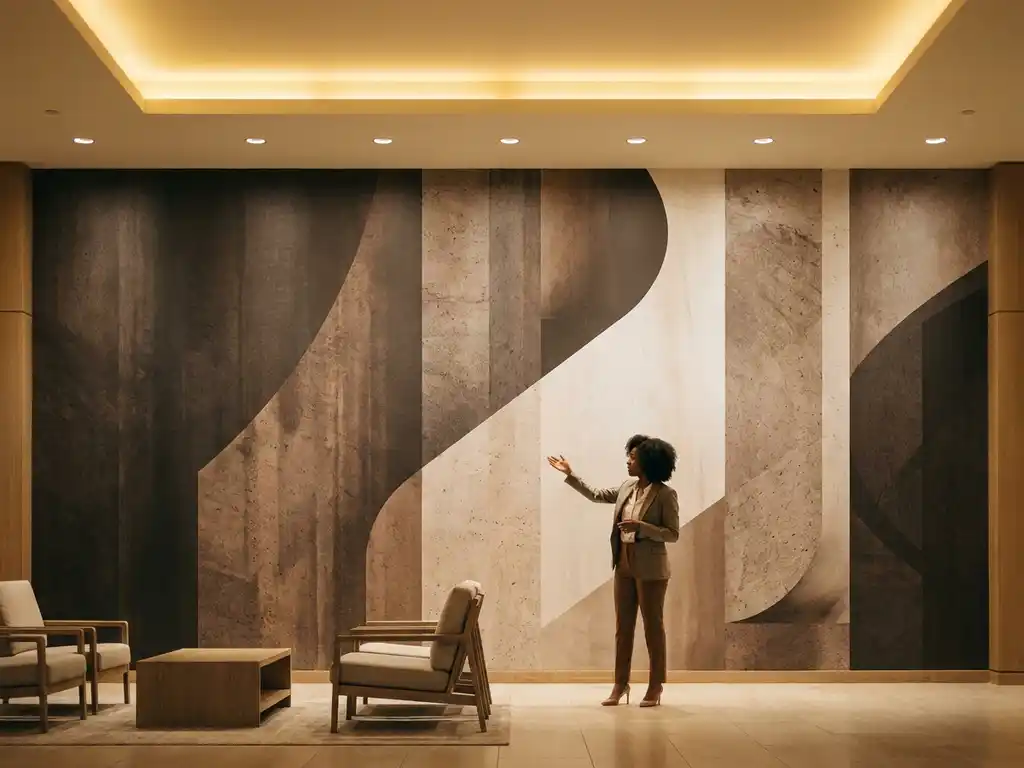
Yes, non-woven wallpaper can in most cases be removed from the wall without leaving any residue. The non-woven backing material makes it possible to peel off the wallpaper dry and in one piece, without the need for water or steam. However, whether the removal is truly residue-free depends heavily on the substrate, the paste used, and the quality of the application. The following sections answer the most important questions regarding the removal of non-woven wallpaper.
What is the easiest way to remove non-woven wallpaper from the wall?
Non-woven wallpaper is easiest to remove by starting at a corner or seam and slowly and evenly pulling the wallpaper off the wall at a shallow angle. Thanks to the non-woven backing material, the strip remains stable and does not tear as easily, making it possible to peel it off in one piece.
Proceed step by step:
- Look for a seam or an upper corner of the wallpaper strip as a starting point.
- Carefully loosen the wallpaper with a putty knife or your fingernails.
- Pull the strip down slowly and evenly, at as flat an angle to the wall as possible.
- Avoid jerky movements, as these can cause the paste to tear and residues to stick to the wall.
On freshly painted or well-prepared surfaces, peeling it off often succeeds without any further treatment. On older wallpapering, it can help to briefly dampen the seam with a damp sponge before you begin.
Why do non-woven wallpapers sometimes leave glue residue on the wall?
Glue residue occurs when the paste has penetrated deep into a porous or unsealed surface or when the wallpaper has remained on the wall for too long. In these cases, the paste bonds so strongly with the plaster or paint that it is not completely removed when the wallpaper is pulled off.
Other common causes are:
- Wrong paste: Not every wallpaper paste is suitable for non-woven wallpaper. If a paste that is too strong or not compatible with non-woven wallpaper is used, the risk of residue increases significantly.
- Soaking time too short: If the wallpaper did not have sufficient time after pasting to penetrate the material, the adhesion can be uneven and it may tear in places when being removed.
- Damaged wall surface Cracks, unplastered areas or old layers of paint can cause the paste to adhere unevenly and behave differently when removed.
- Long dwell time: The longer wallpaper stays on the wall, the more the paste can harden and bond with the surface.
What role does the substrate play in residue-free removal?
The substrate is the most important factor in whether non-woven wallpaper can be removed without leaving residue. A smooth, sealed, and well-prepared substrate makes removal significantly easier because the paste cannot form deep bonds with the wall surface.
As a general rule:
- Sealed walls: Walls that have been treated with a primer or deep primer before wallpapering make it significantly easier to remove wallpaper later. The sealing prevents the paste from penetrating into the plaster.
- Woodchip wallpaper and textured surfaces: With woodchip wallpaper or heavily textured surfaces, the paste can penetrate into the recesses. Removal is often still possible, but requires more patience.
- Direct plastering without primer: On untreated plaster, the paste penetrates deeply. This is where residue-free removal is most difficult and usually requires follow-up treatment.
- Old wallpaper layers: If the non-woven wallpaper was glued directly onto existing wallpaper, removing it is more complicated because the layers affect each other.
Anyone planning new wallpaper and wanting to ensure easy removal later should always carefully prime the wall before hanging wallpaper.
How to remove stubborn adhesive residue after peeling?
Stubborn adhesive residue can be most reliably softened with warm water and a sponge, and then removed with a scraper or brush. For very stubborn residue, special wallpaperremovers or softeners from a specialist retailer are helpful.
Proceed as follows:
- Dampen wallpaper paste residue: Apply warm water to the affected areas using a sponge or roller. Allow the moisture to soak in for a few minutes to soften the paste.
- Removal Remove the softened paste with a plastic scraper or a soft brush. Avoid metal scrapers on delicate plaster, as they can damage the surface.
- Use wallpaper remover: For particularly stubborn stains, you can use a commercially available wallpaper remover. Be sure to let the product sit according to the manufacturer's instructions.
- Allow the wall to dry: After removing the residue, let the wall dry completely before continuing to paint or hang wallpaper. Damp spots can cause adhesion problems later on.
Steam cleaners can also be helpful, but should only be used on sturdy surfaces, as intense exposure to moisture can damage plaster.
Are there non-woven wallpapers specifically designed for easy removal?
Yes, there are non-woven wallpapers specifically designed for easy and residue-free removal. These products use special coatings or backing materials that control the adhesion of the paste and make peeling easier without damaging the wall surface.
The following properties are particularly relevant in this context:
- Optimized paste compatibility: High-quality non-woven wallpapers are matched to specific types of wallpaper paste. This combination ensures that the wallpaper adheres reliably, but can be cleanly removed later.
- Even coating: A uniform surface coating prevents the paste from penetrating unevenly into the material, which facilitates removal in one piece.
- PVC-free materials: PVC-free vinyl wallpaper often behaves more gently when removed than conventional materials with plastic components.
For professional applications in large-format printing, such as trade fairs, exhibitions, or temporary installations, removability is an important selection criterion. Here, it is worth specifically looking for products that are explicitly designed for temporary use or easy removability.
Vinyl wallpaper from com2C: PVC-free, ready to print and practical to use
We develop and produce printable non-woven wallpapers that are not only impressive in print quality, but also function reliably during installation and removal. Our Non-woven wallpapers from com2C are PVC-free, compatible with standard large-format printers, and specifically tailored to professional B2B applications.
What makes our non-woven wallpapers relevant for your application:
- PVC-free composition without compromising on quality or print results
- Optimized surface for even paste absorption and clean removal after use
- Compatibility with solvent, latex, UV and water-based ink systems of leading printer manufacturers
- Technical consultation for the right choice of paste and application, so the result is right from the start
If you have any questions about material selection or would like to discuss an application, we are happy to help. Just get in touch Contact.