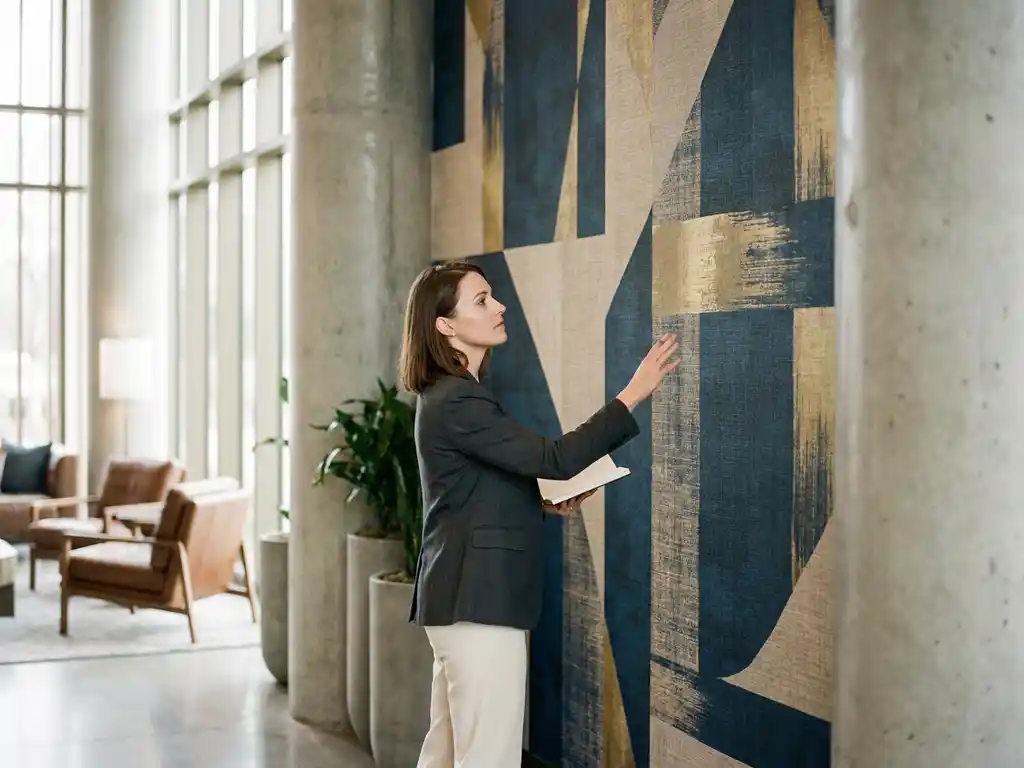
Vinyl wallpaper is in most cases the better choice over wall paint when it comes to design depth, durability, and flexibility. While wall paint creates a uniform surface, vinyl wallpaper offers texture, patterns, and individual printing options on a single surface. The following questions highlight the key differences and help you make the right decision for your project.
How long does vinyl wallpaper last compared to wall paint?
Vinyl wallpaper lasts significantly longer under normal conditions than wall paint. While wall paint fades after a few years, cracks appear or swell with moisture, high-quality vinyl wallpaper remains stable for ten years or more with proper installation. The vinyl backing is form-stable, tear-resistant, and better able to tolerate slight wall movement than a paint layer.
Wall paint usually needs to be replaced every three to five years, especially in heavily used areas like hallways or kitchens. However, vinyl wallpaper remains largely intact even under mechanical stress, provided the wall is dry and clean. This not only makes it more visually durable in the long term, but also more economically attractive for projects where durability is a factor.
What are the advantages of vinyl wallpaper compared to wall paint?
Vinyl wallpaper offers several tangible advantages over wall paint: it hides imperfections and small cracks in the wall, is available in a wide variety of textures and designs, can be laid accurately, and allows for individual print motifs. Wall paint, on the other hand, reveals every underlying flaw and offers little creative depth.
- Concealment of wall imperfections: The vinyl backing bridge over minor unevennesses and covers fine cracks without the need for any complex preparatory work.
- Variety of design: From structured surfaces to photorealistic print motifs, virtually all optical effects are achievable.
- Simple processing: The vinyl wallpaper is routed dry onto the wall and applied with adhesive on the wall, which greatly facilitates the work.
- Removable without residue: High-quality fleece can be removed from the wall dryly without damaging the wall.
- Moisture tolerance: Vinyl wallpaper is dimensionally stable and does not warp when soaked, which prevents misalignment during installation.
Which rooms are particularly well suited for using vinyl wallpaper?
Vinyl wallpaper is particularly suitable for living rooms, bedrooms, offices, reception areas and hallways. In these rooms, it fully demonstrates its strengths: it adds a design touch, camouflages older walls and is durable enough to keep even intensively used areas appealing for a long time.
In commercial spaces such as retail stores, hotels, or trade show floors, vinyl wallpaper is often used for large-scale wall designs because it can be installed seamlessly and reproduces professional print designs with precision. It is also a popular choice in offices and conference rooms because it combines brand identity and spatial impact.
In damp rooms like bathrooms, caution is advised. There, you should opt for specially coated variants or avoid other materials, as permanently high humidity can also cause damage to stable fleece over time.
How is vinyl wallpaper installed and removed?
Vinyl wallpaper is applied with adhesive to the wall, not onto the wallpaper. You apply the adhesive to the section of the wall, run the dry tape along it, and then align it. The process is simpler than with conventional paper wallpaper because the vinyl is not soaked through and does not stretch.
Installing step by step
Prepare the wall: It should be clean, dry, and smooth. Then apply glue to the wall, place the first strip vertically, and level it with a straightedge. Tap the strips against each other without overlapping. Wipe out air bubbles with a tape brush from the center outwards.
Remove without damage
When removing the wallpaper, tear off the wallpaper at an angle and slowly and evenly pull the tape off the wall. High-quality non-woven wallpaper can usually be removed completely and without leaving any residue. The adhesive residues on the wall can then be wiped off with warm water.
Can vinyl wallpaper be individually printed?
Yes, vinyl wallpaper can be printed individually very well. Printable vinyl is specially designed for large-format printing and reliably captures inks from solvent-, latex-, UV-, and water-based printing systems. The result is sharp, color-rich designs that also look great on large surfaces without losing quality.
For companies, agencies, and exhibition organizers, printed felt is one of the most effective ways to bring brand motifs, photographs, or space concepts directly onto the wall. The sheets are printed to fit exactly and blend seamlessly together, so even large-format motifs appear seamless without visible interruptions. It is important to ensure that the felt used is suitable for the specific printer process, as different ink systems require different coating methods.
When is wall paint the better choice than vinyl wallpaper?
Wall paint is the better choice if you need a quick, cost-effective renovation that leaves the wall in pristine condition and does not require any design accents. Also, in the case of frequently changing room concepts where flexibility is more important than durability, color can be the more practical solution.
Color is also useful in rooms with very high humidity, where suitable vinyl wallpaper is not available, or when a minimalist, unstructured appearance is desired. In rental apartments, where the tenant must restore the original condition upon moving out, color can also be easier to handle, provided that the walls are already in good condition.
In short: Wall paint is suitable for uncomplicated, neutral surfaces. Once design, durability, or individual motifs come into play, vinyl wallpaper is the stronger option.
printable vinyl wallpaper from com2C for professional wall design
We develop and produce printable vinyl wallpaper that is specifically designed for the requirements of digital large-format printing. Our media operate reliably with the most common printing systems and deliver consistent results even with complex designs and large areas.
- Compatibility: Our vinyl wallpaper is compatible with solvent-based, latex-based, UV-based and water-based ink systems from HP, Epson, Roland, Mimaki, Durst and other manufacturers.
- PVC-free materials: We offer PVC-free alternatives that do not compromise on print quality or durability.
- In-house coating development: Our inkjet coatings are produced in our own laboratory, which allows us to respond quickly to individual requirements.
- Seamless processing: The tracks are designed so that they strike a dull sound and depict large-format motifs without visible transitions.
- Technical consulting: We help you choose the right medium for your printer and application project.
If you are looking for the right nonwoven material for your production, you can find our range here. com2C Vinyl Wallpapers. We are happy to provide you with a personal assessment of your project by Contact available.