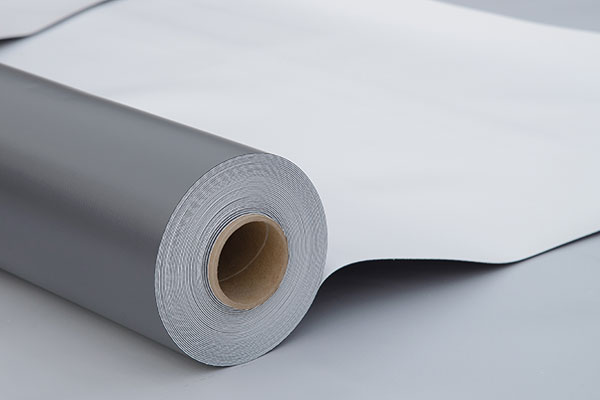
Plastic waste, microplastics, plasticizers - the consequences of our gigantic consumption of plastics are serious and cannot yet be foreseen in every detail. Plastics are rightly criticized and are already being successfully replaced in some places.
Nevertheless, plastic is light, versatile and inexpensive to produce. If you look closely and do the math, plastic even beats the supposedly greener alternative in some places, for example in the battle between paper bags and plastic bags or glass bottles and plastic bottles.
In digital large-format printing, plastic is absolutely essential. In addition to printing presses and polymeric inks, the focus here is particularly on consumables and print media based on various plastics: PET, PP, PVC, PE, PES, etc.
However, not all plastics are the same. PVC (polyvinyl chloride) is facing particularly heavy criticism. Is there any truth to PVC bashing? Is PVC really that dangerous? Where can we use PVC-free print media?
We go into detail and take a closer look at the mass-produced plastic PVC.
On our own behalf:
Honest and transparent: com2C also has PVC-based print media in its range. For some applications, alternatives are still too expensive. Or the sometimes complex development of alternatives is not yet complete. However, our stated goal is to gradually expand our range with PVC-free alternatives. PVC is the most harmful of the common plastics and therefore the first we want to completely replace. However, we still need some time in some places to develop alternatives. We are happy to receive any PVC-free print media offers that we can make available to you today. A large part of our digital print media is already PVC-free. More on this
History: PVC over the course of time
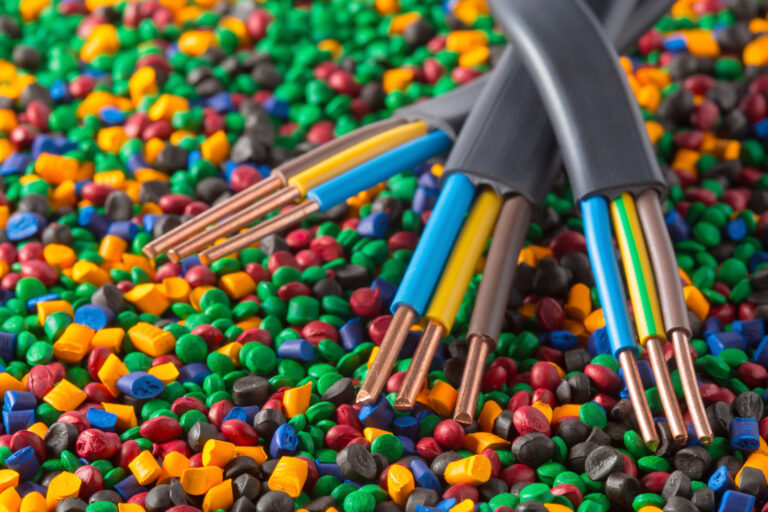
Polyvinyl chloride (PVC) is a thermoplastic polymer. The French chemist Henri Victor Regnault had already produced polyvinyl chloride in 1835. However, he did not realize the importance of his discovery. In 1913, Fritz Klatte patented the "polymerization of vinyl chloride and use as a substitute for horn, as films, artificial threads and for paints" after he had laid the foundation for PVC production at the chemical factory Griesheim-Elektron a year earlier.
Finally, the lack of raw materials during and after the First World War led to an increasing use of PVC as a substitute. Polyvinyl chloride has been manufactured in large-scale plants since 1928. However, it was not until the discovery that a waste product from the chemical industry could be used to manufacture PVC that it finally became a cheap mass-produced product.
The raw material chlorine is a by-product of the production of caustic soda. Since caustic soda is one of the most commonly used laboratory and industrial chemicals, PVC has become even cheaper to produce.
PVC – the facts:
PVC is easy to color and hardly absorbs any water. It is resistant to some acids and alkalis and conditionally resistant to ethanol, oil and petrol. Polyvinyl chloride is attacked by acetone, diethyl ether, tetrahydrofuran (THF), benzene, chloroform and concentrated hydrochloric acid, among other things.
Trade names for PVC were and are Ekadur, Decelith, Gölzalith, Vinidur, Trovidur, Hostalit, Lucalor, Corzan, Glastoferan (PVC-C) and Ekalit, Dekelith, Mipolam, Barrisol (soft PVC for stretch ceilings), Igelit (soft PVC) and Piviacid (GDR's fibrous PVC).
PVC is divided into hard PVC and soft PVC:
- Rigid PVC: PVC-U (Unplasticized). Use for window profiles, drainpipes and much more.
- Soft PVC: PVC-P (Plasticized). Use for floors, toys, hoses, artificial leather, seals, tarpaulins, rolled goods and much more.
Additives and plasticizers in PVC
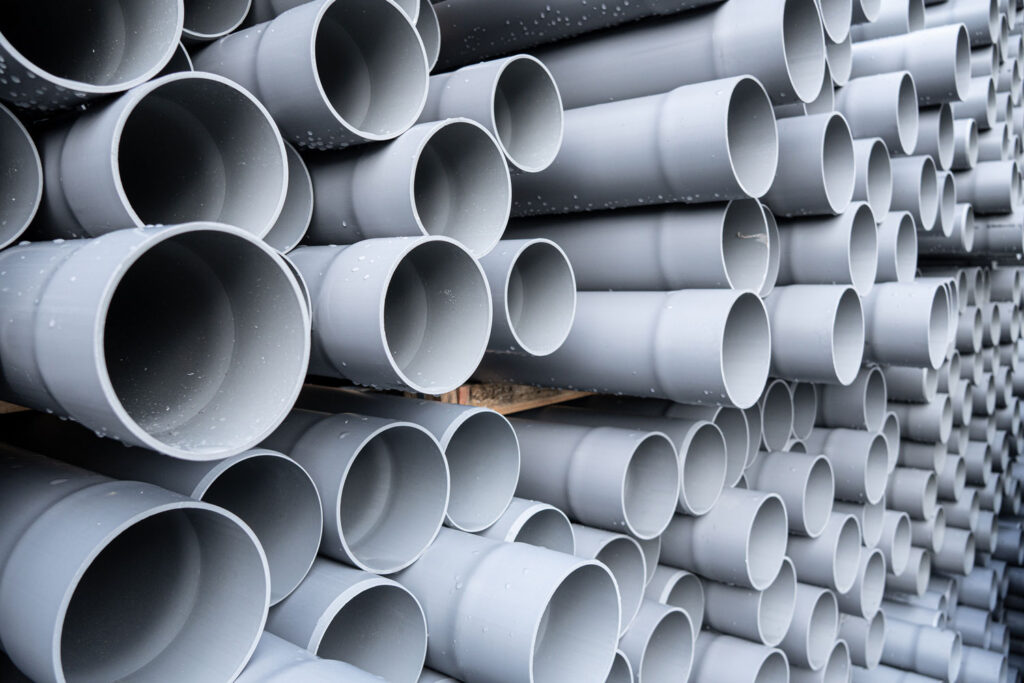
Polyvinyl chloride (PVC), which in itself is brittle and hard, only becomes the perfect material for various applications when it is treated with additives and plasticisers. Additives ensure, for example, higher elasticity, better bending strength, flame retardancy, stabilisation and a longer service life.
But it is precisely these harmful additives that make PVC dangerous to health and the environment. Phthalates or bisphenol A, for example, are considered to have hormonal effects. Its use as a baby bottle has already been banned.
The problem with PVC
PVC accounts for 13% of the plastic used in Germany (data for the year 2017*).
The additives that make the material PVC usable for many purposes in the first place are problematic. The additives and plasticizers used are not firmly bound in the plastic. They escape over time and can accumulate in the room air or in house dust.
Toxic chemicals and microplastics burden us during the production, use and disposal of plastic. The fracking fluid used in oil production contains over 170 toxic substances with possible health effects on the immune system or organs. Benzene, polycyclic aromatic hydrocarbons and styrene are released during the refining and production of the petroleum-based base substrates. During the actual processing and use of the PVC product, pollutants such as heavy metals, persistent organic substances, carcinogens, endocrine disruptors and microplastics are released into the environment.
The disposal of polyvinyl chloride is also not without problems. When burned, forms corrosive, gaseous hydrogen chloride. In waste incineration plants, for example, this is neutralized with lime in the flue gas cleaning plants. The resulting residues are classified as hazardous waste.
PVC in print media
When it comes to print media, PVC is still very popular, especially for tarpaulins and self-adhesive films. Especially when it comes to high-performance films for long-term outdoor use, there is (still) no alternative to PVC. Another reason for the great popularity of PVC is its cheap price.
Alternatives to PVC
PVC is a plastic that is used very often, but it still has to be classified as highly critical. It is currently not (yet) possible to completely dispense with plastics in the printing industry. But there are big differences in the harmfulness of the materials and more environmentally friendly alternatives. Switching to PVC-free print media should be a medium to long-term goal.
PVC substitutes for print media can be PET (polyethylene terephthalate), PP (polypropylene), or PE (polyethylene).
PET is a thermoplastic that is widely used in the food industry and has fairly good recycling rates: pure PET can be fully recycled. New research projects are already investigating the degradation of PET through bacterial decomposition. Blockout and backlit films can be made from PET.
PP and PE belong to the group of polyolefins and are chemically similar.
pp is free of plasticizers and inexpensive to produce. The thermal recycling of PP is not very problematic, since the substance burns completely to form carbon dioxide under the conditions of modern plants.
PE It is somewhat less heat-resistant than PP. It does not contain any dangerous plasticizers or heavy metals and is therefore considered to be less harmful to health. PE is considered safe and is well recyclable. Compared to PVC, less resources are needed in the production of PE.
*Sources: Wikipedia, BUND plastic atlas
https://www.bund.net/fileadmin/user_upload_bund/publikationen/chemie/chemie_plastikatlas_2019.pdf