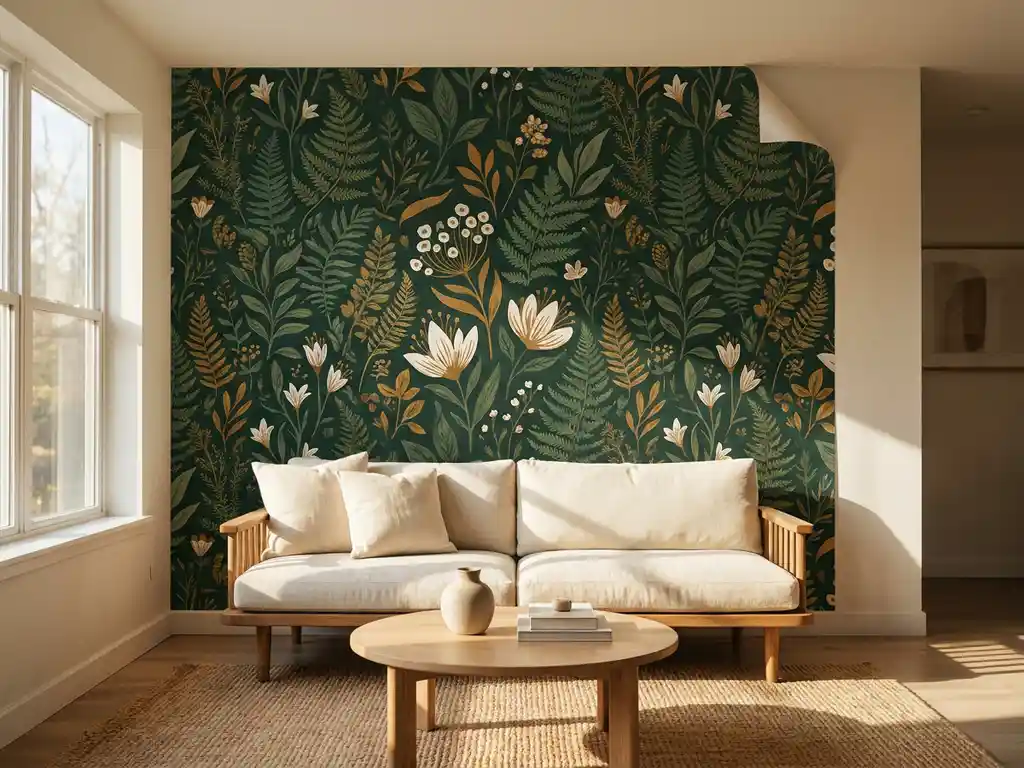
For wall decoration in rental apartments, especially non-removable techniques such as self-adhesive films, removable wallpaper and magnetic paints are suitable. These methods significantly change the appearance of a room without permanently affecting the building structure. Self-adhesive digital printing films have established themselves as a versatile and visually high-quality solution. The following questions clarify the most important aspects regarding film design, adhesion and proper installation.
Which wall decoration techniques can be removed without leaving any residue?
Removable wall design techniques for rental apartments include self-adhesive films, removable vinyl wallpaper, magnetic paints, and temporary wall stickers. All of these methods leave no adhesive residue, discoloration, or damage to the substrate when applied correctly. For large, individually designed areas, self-adhesive films from digital printing are the most flexible option.
When comparing the techniques, there are significant differences in effort and results:
- Self-adhesive films: Can be cut to size, applied without bubbles and removed without residue. Ideal for the kitchen, bathroom and living area.
- Removable vinyl wallpaper: Good for large-area wall designs, but less flexible in terms of moisture resistance.
- Wall stickers: Easy to install, but limited in size and design possibilities.
- Magnet color: Functional, but visually not very appealing and not particularly elaborate in its use.
For tenants who want true design freedom without risking problems with the landlord upon departure, self-adhesive films are the most practical choice. They combine individual aesthetics with easy handling.
How well do self-adhesive films adhere to various surfaces?
Self-adhesive films adhere very reliably to smooth, clean, and dry surfaces. On rough, porous, or highly textured surfaces, the adhesion decreases because the adhesive does not fully cover the surface. The substrate is therefore the most important factor for a durable and residue-free result.
Good suitable substrates are:
- Smooth wall paint (matt or silk-matt)
- Tiles with a flat surface
- Glass and mirrors
- Smooth wooden surfaces and furniture fronts
More suitable are highly structured non-textured wallpaper, unplastered concrete walls, or surfaces with a grease film. Anyone working on such substrates should clean and, if necessary, smooth the surface beforehand. For tiles: joints can affect the adhesion to the edges; however, the film adheres very well to the tile surface itself.
What is the difference between adhesive film and printed digital printing film?
Adhesive film is a one-color or textured self-adhesive product sold in rolls. Printed digital printing film is a specially coated carrier film that is individually printed with inkjet printers and then coated with an adhesive layer or used directly as self-adhesive film. The main difference lies in the freedom of design and print quality.
Simple adhesive films are suitable for monochrome surfaces, furniture coatings, or simple decorations. On the other hand, printed digital printing films allow:
- Individual motifs, photos and graphics in high resolution
- Customized formats for any wall size
- Precise color reproduction through professional printing technology
- Special finishes such as matte, satin matte or textured
Anyone who wants to customize a kitchen backsplash with an individual design or enhance a bathroom with a custom-made panorama print cannot do without printed digital printing films. These are produced by printing service providers based on special printing media that are optimized for the respective printing systems.
Which walls in the rental apartment are particularly suitable for foil design?
Walls with a smooth, clean surface and without significant moisture exposure are particularly suitable for film design. In practice, this applies primarily to kitchen walls behind the worktop, bathroom walls with tiled floors, accent walls in the living room, and hallway walls. These areas offer ideal adhesive conditions and benefit most visually from individual design.
Kitchen and bathroom
Kitchen backsplashes are a classic application: the area is limited, the base is usually smooth tiled, and the effect of an individual design is immediately visible. The same applies to tiled wall areas in the bathroom. It is important to choose a film that can withstand moisture and occasional splashes of water. High-quality digital printing films with the appropriate coating meet this requirement.
Living room and hallway
An accent wall in the living room with a large-format print changes the overall effect of the room. Smooth plastered and painted walls offer optimal adhesion conditions here. In the hallway, where there is often little natural light, a light or textured film can visually enhance the space. Both areas are particularly interesting for tenants because no structural interventions are required.
How is self-adhesive film properly applied to the wall?
Self-adhesive film is correctly applied by thoroughly cleaning the wall, applying the film from top to bottom in small sections, and pushing out air bubbles with a squeegee or credit card outwards. A clean surface and quiet working without draughts are the most important prerequisites for a bubble-free result.
The step-by-step procedure:
- Prepare the substrate: Clean the wall with a damp cloth, remove any grease or dust residue, and let it dry completely.
- Align the foil: Position the film on the wall and temporarily fix it with masking tape before removing the backing paper.
- Step by step remove the carrier paper: Do not remove the entire protective film at once; work section by section from top to bottom.
- Remove bubbles: Using a comb or a credit card, stroke evenly from the center outwards.
- Pressing the edges: Firmly press down all edges, especially at corners and transitions.
For large-format films, it is recommended to work in pairs. One person holds the film, while the other removes the backing paper and folds it at the same time.
How can adhesive film be removed without leaving any residue after removal?
Adhesive film can be removed without leaving any residue by slowly peeling it off from the wall at a slight angle. Heat from a hairdryer makes the removal easier because the adhesive becomes softer as a result. Residual adhesive can be completely removed with standard silicone remover or isopropyl alcohol and a soft cloth.
The following points help in the residue-free removal:
- Use temperature: Heat the foil with a hairdryer to about 40 to 50 degrees Celsius, then slowly peel it off.
- Flat angle: Do not tear the film straight from the wall; rather, peel it off at an angle of about 30 to 45 degrees.
- Treating adhesive residues: Treat remaining residues with a solvent based on isopropyl alcohol or a special adhesive remover.
- Check substrate: Before removing the wallpaper, ensure that the wall paint is in good condition. On very old or fragile plaster, a residue-free film can also carry paint with it when removed.
High-quality self-adhesive films with specially developed adhesive systems are significantly less complicated in this regard than cheap mass-produced products. The adhesive is formulated so that it does not form a chemical bond with the substrate even after prolonged adhesion.
Individual wall design with com2C: materials for print service providers
Anyone who wants to create a kitchen backsplash, bathroom foil, or accent wall with an individual design relies on a printing service provider that works with high-quality materials. We supply exactly these materials: self-adhesive digital printing media that have been developed for precise color reproduction, reliable adhesion, and residue-free removal.
- Self-adhesive films for walls, floors and furniture, optimized for solvent, latex and UV printing systems
- Materials with specially designed adhesive systems for residue-free removal even after prolonged use
- Moisture-resistant variants for the kitchen and bathroom
- PVC-free alternatives from our GoGreener range
- Technical advice for printing service providers who are looking for the right media for specific applications
Our Interior Design Print Media are designed to enable print service providers to deliver a result that is visually and technically convincing to their end customers. If you have questions about suitable materials for your next wall design, we are happy to assist you with a consultation. Consultation available.