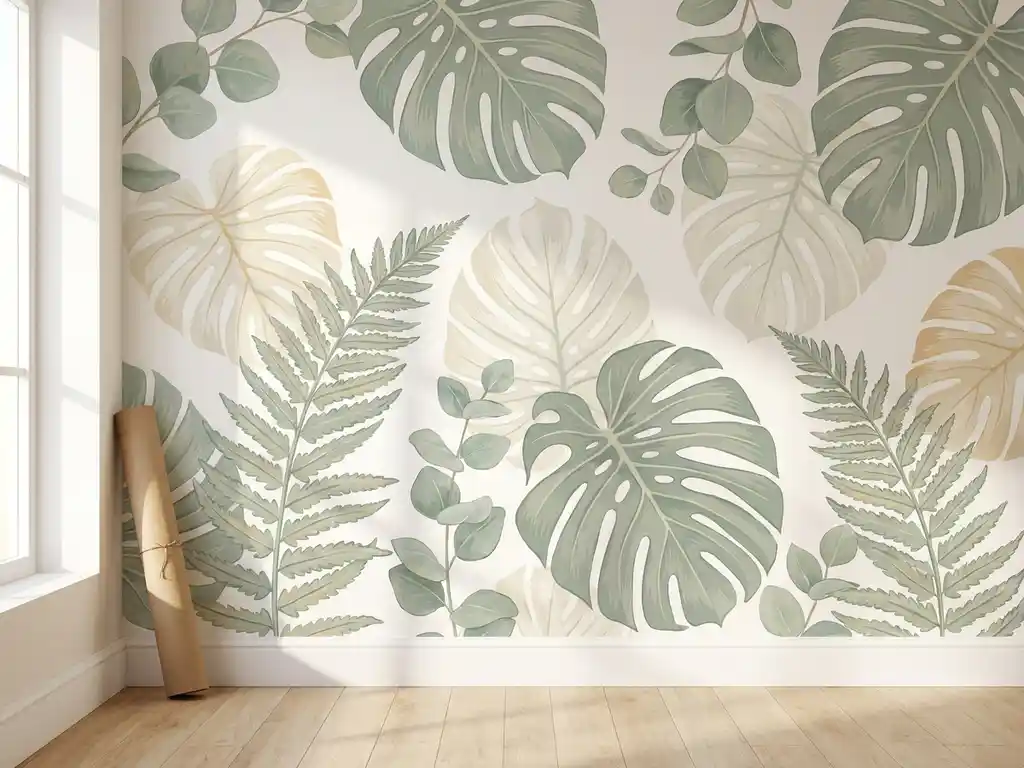
Eco-friendly wall design relies on PVC-free materials, solvent-free printing techniques, and certified print media that can be recycled or composted after use. For professional large-format printing, this specifically means: PVC-free films, non-woven wallpapers, and printable textiles replace conventional plastic materials without compromising on print quality. The following sections answer the most important questions regarding sustainable wall media, printing techniques, and economical use in everyday production.
Which materials are considered environmentally friendly for wall design?
Wall materials are considered eco-friendly if they do not contain PVC, are based on renewable or recycled raw materials, and can be cleanly disposed of after use. These include PVC-free self-adhesive films based on polyester, non-woven wallpapers made of cellulose and polyester fibers, and printable textiles. What matters is not only the raw material, but also the coating and the printing inks used.
In large-format printing, the following material groups have established themselves as particularly environmentally friendly:
- PVC-free self-adhesive films: Based on polyester or PP, free of chlorine-containing plasticizers, often recyclable
- Non-woven wallpapers: Made of cellulose and synthetic fibers, they can be processed without solvents and are easily removable without leaving residue.
- Printable textiles: Polyester or natural fiber fabric without PVC coating, suitable for latex printing
- Paper-based wall media: Fully recyclable, but less durable at high humidity
It is important that materials are environmentally friendly not only in their production, but also in their application: solvent resistance, easy processing, and clean disassembly without adhesive residue contribute to the overall balance.
What is the difference between PVC film and PVC-free film for walls?
PVC films contain polyvinyl chloride, which releases chlorine-containing compounds during production and disposal. PVC-free films instead rely on polyester, polypropylene, or other plastics without chlorine, which significantly reduces environmental impact throughout the product lifecycle. For wall applications, both variants are suitable for printing, but differ in disposal and certifiability.
Specifically, the difference means for practice:
- Disposal: PVC films must be treated as hazardous waste, while PVC-free alternatives can often be disposed of in standard plastic recycling
- Certifications: PVC-free materials more easily meet requirements such as Blue Angel, REACH or Cradle-to-Cradle
- Indoor air PVC films can release plasticizers (phthalates), which is relevant for indoor applications.
- Print compatibility: PVC-free films are available today for solvent, latex, and UV printing and deliver comparable print results
For projects in public buildings, schools, or healthcare facilities, switching to PVC-free wall films is often not only ecologically sensible, but also required by regulations.
Are non-woven wallpapers really more sustainable than conventional foils?
Non-woven wallpapers are more sustainable than conventional PVC films in most application scenarios because they do not contain chlorine, require less adhesive, and can be removed from the wall without leaving any residue. For large-format printing, non-woven wallpapers also offer the advantage that they can be printed with water-based inks, which reduces emissions during the printing process.
The sustainability benefits of non-woven wallpaper at a glance:
- No PVC, no plasticizers, no chlorine-containing compounds
- Compatible with water-based and latex inks, which emit significantly fewer VOCs (volatile organic compounds) than solvent inks
- Easy disassembly without adhesive residue, which facilitates renovation work
- Many non-woven wallpapers are recyclable or can at least be disposed of in the residual waste bin
- Lower weight than PVC films, which relieves pressure on transport and logistics
A relevant note for practical application: The sustainability of a non-woven wallpaper also depends on the coating. Not every non-woven wallpaper is automatically environmentally friendly. Look for products without solvent-based coatings and with proven recyclability.
Which printing techniques are best suited for eco-friendly wall design?
For environmentally friendly wall decoration, latex printing and water-based inkjet printing are best suited because they do not require solvent-based inks and produce low VOC emissions. UV printing is also an option if solvent-free UV inks are used. Solvent printing is technically possible, but from an environmental perspective, it is the weakest choice for interior applications.
Latex printing
HP or Epson latex printers use water-based inks with latex polymers. The inks are low-odor, GREENGUARD-certified, and suitable for indoor use. Latex printing works well on non-woven wallpaper, PVC-free films, and textiles, delivering lightfast, durable results.
Water-based inkjet printing
Water-based inks have the lowest emission levels of all printing techniques. They are particularly suitable for non-woven wallpapers and paper-based wall media. The limitation: water-based prints are less water- and scratch-resistant than solvent or UV prints, which should be taken into account for heavily used wall surfaces.
How do you identify truly sustainable print media for wall applications?
Truly sustainable print media for wall applications can be identified by independent certifications, traceable raw material information, and a clear statement regarding disposal. Marketing terms like eco or green without evidence are not a reliable criterion. Meaningful certificates and technical data sheets are the more reliable benchmark.
You should pay attention to the following points when shopping:
- Certifications: Blue Angel, GREENGUARD Gold, Cradle-to-Cradle, or ISO 14001 are relevant certificates
- Material Declaration: The data sheet should transparently indicate raw materials, coating type, and plasticizer content.
- PVC-free: Explicit „PVC-free“ specification with proof, not just „environmentally friendly“
- Disposal instructions: Clear information on whether the material is recyclable or which waste category it belongs to
- Ink system compatibility: Sustainable media should work with water-based or latex inks
Fragen Sie Ihren Lieferanten gezielt nach Sicherheitsdatenblättern und Zertifikaten. Ein seriöser Anbieter stellt diese Informationen ohne Umwege zur Verfügung.
Wie lassen sich umweltfreundliche Wandmedien im Großformatdruck wirtschaftlich einsetzen?
Umweltfreundliche Wandmedien lassen sich wirtschaftlich einsetzen, wenn Sie Material, Drucktechnik und Anwendungsfall aufeinander abstimmen. PVC-freie Alternativen kosten in der Anschaffung teilweise etwas mehr, reduzieren aber Entsorgungskosten und ermöglichen den Zugang zu Ausschreibungen, die Nachhaltigkeitsnachweise verlangen. Langfristig ist die Kalkulation oft günstiger, als sie auf den ersten Blick erscheint.
Praktische Ansätze für den wirtschaftlichen Einsatz:
- Materialwahl nach Nutzungsdauer: Für kurzfristige Installationen reichen leichtere, günstigere PVC-freie Folien; für Dauerprojekte lohnen sich robustere Vliestapeten
- Druckertinten abstimmen: Latexdrucker, die Sie ohnehin betreiben, sind direkt kompatibel mit den meisten PVC-freien Wandmedien
- Entsorgungskosten einkalkulieren: PVC-freie Materialien sparen bei der Entsorgung, was in der Gesamtkalkulation sichtbar wird
- Zertifizierte Materialien als Argument: Kunden aus dem öffentlichen Sektor, dem Bildungsbereich oder dem Gesundheitswesen fragen aktiv nach Nachhaltigkeitsnachweisen
- Standardisierung im Sortiment: Wenige, gut getestete nachhaltige Medien reduzieren Rüstzeiten und Reklamationsrisiken
Der Umstieg auf nachhaltige Wandmedien muss kein Kompromiss bei der Marge sein. Mit der richtigen Materialauswahl und klarer Kommunikation gegenüber Ihren Kunden wird Nachhaltigkeit zum Wettbewerbsvorteil.
Nachhaltige Wandgestaltung mit com2C: PVC-freie Medien aus eigener Entwicklung
Wir entwickeln und produzieren Druckmedien für den Großformatdruck, die technisch funktionieren und gleichzeitig umweltverträglich sind. Unsere GoGreener-Linie umfasst speziell für nachhaltige Wandanwendungen entwickelte Materialien, die wir in unserem eigenen Labor testen und kontinuierlich weiterentwickeln.
Für Wandgestaltungsprojekte bieten wir unter anderem:
- Selbstklebendes Wallpaper PVC-frei für direkte Wandverklebung ohne Kleister, rückstandsfrei ablösbar
- Nicht selbstklebendes Wallpaper PVC-frei für klassische Tapezieranwendungen mit wasserbasierten Klebstoffen
- Selbstklebendes Textil PVC-frei für textile Wandgestaltung mit weicher Haptik und nachhaltiger Materialbasis
Alle Materialien sind kompatibel mit Latex-, UV- und wasserbasierten Drucksystemen von HP, Epson, Roland, Mimaki und weiteren führenden Herstellern. Wir liefern Ihnen nicht nur das Material, sondern auch die technische Beratung zur richtigen Druckereinstellung, Profilierung und Verarbeitung.
Wenn Sie nachhaltige Wandmedien in Ihre Produktion integrieren möchten und konkrete Fragen zu Materialauswahl oder Druckkompatibilität haben, sprechen Sie uns gerne an. contact us lohnt sich, bevor Sie investieren.